Friday, February 28, 2025

A00134 - Roberta Flack, Grammy Winning Singer and Pianist

 888888888888888888888888888888888888888888888888888888888888888888888888888888888888

Roberta Flack
Flack in 1976
Flack in 1976
Background information
Birth nameRoberta Cleopatra Flack
Also known asRubina Flake[1]
BornFebruary 10, 1937
Black Mountain, North Carolina, U.S.
DiedFebruary 24, 2025 (aged 88)
New York City, U.S.
Genres
Occupations
  • Singer, 
  • songwriter, 
  • musician
Instruments
  • Vocals 
  • keyboards
Years active1968–2022
Labels
Spouse
(m. 1966; div. 1972)

888888888888888888888888888888888888888888888888888888888888888888888888888888888888

Roberta Flack (born February 10, 1937, Black Mountain, North Carolina, U.S.—died February 24, 2025, Manhattan, New York) was an American rhythm and blues (R&B) singer known for the number-one hits “The First Time Ever I Saw Your Face” (1972) and “Killing Me Softly with His Song” (1973), and for her duets with soul music singer Donny Hathaway “Where Is the Love” (1972) and “The Closer I Get to You” (1977). Flack excelled at telling stories through her music, which draws on an eclectic variety of jazzgospel, soul, folk, and classical music influences.

Early life


Flack was raised in ArlingtonVirginia, by her father, Laron Flack, who worked as a draftsman and played the piano and the harmonica, and her mother, Irene (née Council) Flack, who was a church pianist and organist. Roberta Flack found early musical inspiration in the African Methodist Episcopal Zion Church. In contrast to the more ecstatic sounds of some southern U.S. churches, the African Methodist congregations favoured long-lined hymns and the cultivation of meaningful quietude in its music, which would later become a cornerstone of Flack’s work. She was musically precocious. “At age three, maybe four, there was me at the keys of that church piano picking out hymns we would sing, like ‘Precious Lord, Take My Hand,’ ” she recalled in a 2023 autobiographical children’s book. When her father brought home an old upright piano that he had repaired, Flack learned to play songs while sitting on her mother’s lap. She started studying piano at age nine and began exploring and absorbing a wide range of jazz, R&B, and popular music.


During her teenage years she trained as a concert pianist, harbouring a special affection for composers Johann Sebastian BachRobert Schumann, and Frédéric Chopin. In 1952, at age 15, she obtained a full scholarship to study music at Howard University, where she later met her friend and future duet partner Hathaway. She worked toward a degree in music education while leading her sorority’s vocal ensemble and directing a production of the opera Aida, graduating in 1956. She started graduate studies in music, but, when her father died in 1959, she left school and took teaching jobs in North Carolina and later in Washington, D.C.

Career

Still yearning to perform, she began accompanying opera singers on piano at the prestigious Tivoli Opera House club in the Georgetown section of Washington, D.C., in 1962. One evening in December 1967, she was instructed by her boss, who wanted to clear the busy room for new customers, to stop playing the usual opera music and switch to Christmas carols. At first, she just played piano but soon found herself humming and then singing “The Christmas Song.” The audience applauded and asked her to sing another song. Flack declined, but, in an interview with The Washington Post in 1989, she recalled that moment as “my cue that people would listen to me as a singer.” She began performing several nights a week as a singer and pianist in local clubs, and she quit her teaching job to focus on her music career.

Her club performances were attended by top musicians, such as Burt Bacharach, Ramsey Lewis, and Johnny Mathis. In 1968 Flack performed at a benefit for the Inner City Ghetto Children’s Library Fund in Washington, D.C., and gained notice from jazz musician Les McCann, who later wrote in the liner notes of her debut album First Take (1969), “Her voice touched, tapped, trapped, and kicked every emotion I’ve ever known. I laughed, cried, and screamed for more.” McCann arranged for Flack to audition for Atlantic Records producer Joel Dorn, for whom she played more than 40 songs from her extensive repertoire.


First Take was recorded over a period of just 10 hours at Atlantic Studios in New York City with a backing band of top-tier jazz musicians, including bassist Ron Carter, guitarist John (“Bucky”) Pizzarelli, and drummer Ray Lucas. The album weaves textures of soul and folk music, and Flack’s well-selected track list includes a slower take on the traditional gospel song “I Told Jesus,” singer-songwriter Leonard Cohen’s poetic ballad “Hey, That’s No Way to Say Goodbye,” and folk singer Ewan MacColl’s 1957 love song “The First Time Ever I Saw Your Face.”

In 1970 Flack released her sophomore album, Chapter Two, a critically acclaimed recording that includes her interpretations of “Until It’s Time for You to Go,” written by folk singer Buffy Sainte-Marie, and “Just Like a Woman” by singer-songwriter Bob DylanChapter Two was produced by Dorn and R&B pioneer King Curtis and arranged by Hathaway. On her 1971 album Quiet FireFlack explores the slower, softer side of soul music with renditions of “Bridge over Troubled Water,” composed by singer-songwriter Paul Simon, and “Will You Still Love Me Tomorrow” by the songwriting team of Carole King and Gerry Goffin.

In 1971 actor and director Clint Eastwood chose “The First Time Ever I Saw Your Face” to accompany a love scene in his directorial debut film Play Misty for Me. Atlantic released the song as a single in early 1972, and it spent six weeks at number one on the Billboard Hot 100 chart before winning a Grammy Award for record of the year in 1973. At the same ceremony, Flack and Hathaway won a Grammy for best pop vocal by a duo for the song “Where Is the Love” from their seminal duet album Roberta Flack & Donny Hathaway (1972).

Flack reached the height of her success with the ballad “Killing Me Softly with His Song,” which was composed by songwriters Charles Fox and Norman Gimbel. Before recording the song, she performed it at a 1972 concert, where it received a tremendously positive audience response. Singer-songwriter Marvin Gaye advised her to refrain from performing the song in public again until she recorded it. Released in January 1973, the song reached number one on the Billboard Hot 100 chart, and it eventually earned Flack another Grammy for record of the year. She was the first performer to win two consecutive Grammy Awards for record of the year, a feat that was not accomplished by any other artist until 2001.


She captured another number-one hit with “Feel Like Makin’ Love” (1974), composed by singer-songwriter Eugene McDaniels. She continued to have chart success in the 1970s with her album Blue Lights in the Basement (1977), which featured the romantic ballad “The Closer I Get to You,” another duet with Hathaway. She became a key figure in the emerging Quiet Storm soul music genre, which embraced romantic lyrics and smooth, slow-tempo, jazz-inspired elements. In 1981 she composed and produced the soundtrack album for comedian Richard Pryor’s film Bustin’ Loose.

Flack continued to record and tour during the first two decades of the 21st century. She hosted a national radio show, Brunch with Roberta Flack, from 1995 to 1998. She was honoured with a star on the Hollywood Walk of Fame in 1999. She founded the Roberta Flack School of Music in New York City in 2005, which offers educational initiatives to underserved students, and established the Roberta Flack Foundation in 2010, which supports musical education and various social causes. She received a lifetime achievement award at the 2020 Grammy Awards ceremony. In 2022 her publicist announced that Flack had been diagnosed with amyotrophic lateral sclerosis (ALS) and could no longer sing. She authored the autobiographical children’s book The Green Piano: How Little Me Found Music (2023) with writer Tonya Bolden and illustrator Hayden Goodman.

888888888888888888888888888888888888888888888888888888888888888888888888888888888888

Roberta Cleopatra Flack (February 10, 1937 – February 24, 2025) was an American singer and pianist known for her emotive, genre-blending ballads that spanned R&Bjazzfolk, and pop and contributed to the birth of quiet storm. Her commercial success included the Billboard Hot 100 chart-topping singles "The First Time Ever I Saw Your Face", "Killing Me Softly with His Song", and "Feel Like Makin' Love". She became the first artist to win the Grammy Award for Record of the Year in consecutive years.

Flack frequently collaborated with Donny Hathaway, with whom she recorded several hit duets, including "Where Is the Love" and "The Closer I Get to You". As one of the defining voices of 1970s popular music, she remained active in the industry, later finding success with duets such as "Tonight, I Celebrate My Love" with Peabo Bryson (1983) and "Set the Night to Music" with Maxi Priest (1991). Across her decades-long career, she interpreted works by songwriters such as Leonard Cohen and members of the Beatles.[2] In 2020, Flack received the Grammy Lifetime Achievement Award.[3]

Early life and education

[edit]

Flack was born on February 10, 1937,[4][a] in Black Mountain, North Carolina, to parents Laron Flack, a U.S. Veterans Administration draftsman,[6] and Irene (née Council) Flack[4][7] a high-school cook and church organist.[8] Her family moved to Richmond, Virginia,[8] before settling in Arlington, Virginia, when she was five years old.

Growing up in a large, musical family, she often accompanied the choir of Lomax African Methodist Episcopal Zion Church by playing hymns and spirituals on piano, but she also enjoyed going to the "Baptist church down the street" to listen to contemporary gospel music including songs performed by Mahalia Jackson and Sam Cooke.[9]

When Flack was nine, she took an interest in playing the piano.[7] During her early teens, Flack excelled at classical piano, finishing second in a statewide competition for Black students aged 13,[8] and earning a full music scholarship to Howard University.[10]

Flack entered Howard at the age of 15, making her one of the youngest students ever to enroll there. She eventually changed her major from piano to voice and became an assistant conductor of the university choir. Her direction of a production of Giuseppe Verdi's opera Aida received a standing ovation from the Howard University faculty.[11]

Flack became a student teacher at a school near Chevy Chase, Maryland. She graduated from Howard University at 19 and began graduate studies in music there, but the sudden death of her father forced her to take a job teaching music and English at a small, segregated high school in Farmville, North Carolina,[12] for which she was paid $2,800 a year.[13]

Career

[edit]

Early career

[edit]

Before becoming a professional singer-songwriter, Flack returned to Washington, D.C., and taught at Banneker, Browne, and Rabaut Junior High Schools.[14][15][16][17] She also taught private piano lessons out of her home on Euclid Street, NW, in the city. During that time, her music career began to take shape on evenings and weekends in nightclubs.[18]

At the Tivoli Theater, she accompanied opera singers at the piano. During intermissions, she would sing bluesfolk, and pop standards in a back room, accompanying herself on the piano. Later she performed several nights a week at the 1520 Club, again providing her own piano accompaniment. About this time her voice teacher, Frederick "Wilkie" Wilkerson, told her that he saw a brighter future for her in pop music than in the classics. Flack modified her repertoire accordingly and her reputation spread. In 1968, she began singing professionally when she was hired to perform regularly at Mr. Henry's Restaurant, located on Capitol Hill in Washington, D.C.[19][20][21]

1970s

[edit]
Flack in 1971

In the 1970s, Flack sang and played jazz in a Washington, D.C. nightclub. American jazz pianist and vocalist Les McCann attended one of these sessions,[7] and later wrote in the liner notes of what would be her first album First Take: "Her voice touched, tapped, trapped, and kicked every emotion I've ever known. I laughed, cried, and screamed for more... she alone had the voice." Very quickly, he arranged an audition for her with Atlantic Records, during which she played 42 songs in three hours for producer Joel Dorn. In November 1968, she recorded 39 song demos in less than 10 hours. Three months later, Atlantic reportedly recorded Flack's debut album, First Take, in a mere 10 hours.[22]

In 1971, Flack participated in the legendary Soul to Soul concert film by Denis Sanders, which was headlined by Wilson Pickett along with Ike & Tina TurnerSantanaThe Staple SingersLes McCannEddie HarrisThe Voices of East Harlem, and others. The U.S. delegation of musical artists featured in the film was invited to perform for the 14th anniversary of the March 6 Independence Day of Ghana.[23][24] The film was digitally reissued on DVD and CD in 2004 but Flack declined permission for her image and recording to be included for unknown reasons. Her a cappella performance of the traditional spiritual "Oh Freedom", retitled "Freedom Song" on the original Soul to Soul LP soundtrack, is only available in the VHS version of the film.[25]

Flack's cover version of "Will You Love Me Tomorrow" hit No. 76 on the Billboard Hot 100 in 1972. Her Atlantic recordings did not sell particularly well, until actor/director Clint Eastwood chose a song from First Take, "The First Time Ever I Saw Your Face" written by Ewan MacColl, for the soundtrack of his directorial debut Play Misty for Me; it became the biggest hit of the year for 1972, spending six consecutive weeks at No. 1 and earning Flack a million-selling gold disc.[26] "The First Time Ever I Saw Your Face" finished the year as Billboard's top song of 1972. The First Take album also went to No. 1 and eventually sold 1.9 million copies in the United States. Eastwood, who paid $2,000 for the use of the song in the film,[27] remained an admirer and friend of Flack's ever after. It was awarded the Grammy Award for Record of the Year in 1973. In 1983, she recorded the end music to the Dirty Harry film Sudden Impact, at Eastwood's request.[22]

Flack on the cover of Cash Box, April 22, 1972

In 1972, Flack began recording regularly with Donny Hathaway, scoring hits such as the Grammy-winning "Where Is the Love" (1972) and later "The Closer I Get to You" (1978), both million-selling gold singles.[26] Flack and Hathaway recorded several duets together, including two LPs, until Hathaway's 1979 death.[28] After his death, Flack released their final LP as Roberta Flack Featuring Donny Hathaway.[29]

On her own Flack scored her second No. 1 hit in 1973, "Killing Me Softly with His Song" written by Charles FoxNorman Gimbel l, and Lori Lieberman.[30] It was awarded both Record of the Year and Best Pop Vocal Performance, Female at the 1974 Grammy Awards. Its parent album was Flack's biggest-selling disc, eventually earning double platinum certification. In 1974, Flack released "Feel Like Makin' Love", which became her third and final No. 1 hit to date on the Hot 100; she produced the single and her 1975 album of the same name under the pseudonym Rubina Flake.[1] In 1974, Flack sang the lead on a Sherman Brothers song called "Freedom", which featured prominently at the opening and closing of the movie Huckleberry Finn.[31] In the same year, she performed "When We Grow Up" with a teenage Michael Jackson on the television special Free to Be... You and Me,[32] and a year later in 1975 performed two Johnny Marks songs, "To Love And Be Loved" and "When Autumn Comes", for the animated Christmas special The Tiny Tree.[33][34]

1980–1991

[edit]
Flack in 1995

Flack had a 1982 hit single with "Making Love", written by Burt Bacharach (the title track of the 1982 film of the same name), which reached No. 13. She began working with Peabo Bryson, charting as high as No. 2 on the UK charts with "Tonight, I Celebrate My Love" in 1983.[18]

In 1986, Flack sang the theme song entitled "Together Through the Years" for the NBC television series Valerie, later known as The Hogan Family. The song was used throughout the show's six seasons. In 1987, Flack supplied the voice of Michael Jackson's mother in the 18-minute short film for "Bad".[35] Oasis was released in 1988 and failed to make an impact with pop audiences, though the title track reached No. 1 on the R&B chart and a remix of "Uh-Uh Ooh-Ooh Look Out (Here It Comes)" topped the dance chart in 1989, after failing to chart on the Billboard Hot 100.[36][37]

In 1991, Flack found herself again in the US Top 10 with a cover of the Diane Warren-penned song "Set the Night to Music", performed as a duet with Maxi Priest that peaked at No. 6 on the Billboard Hot 100 charts and No. 2 AC.[38][39]

Later career

[edit]
Flack in 2002
Flack performing in 2013

In 1999, a star with Flack's name was placed on the Hollywood Walk of Fame.[10] In the same year, she gave a concert tour in South Africa. During her tour of the country, she performed "Killing Me Softly" for President Nelson Mandela at his home in Johannesburg.[40] In 2010, she appeared on the 52nd Annual Grammy Awards, singing a duet of "Where Is The Love" with Maxwell.[41]

Flack influenced the subgenre of contemporary R&B called quiet storm, and interpreted songs by songwriters such as Leonard Cohen and members of the Beatles.[42]

In February 2012, Flack released Let It Be Roberta, an album of Beatles covers including "Hey Jude" and "Let It Be". It was her first recording in eight years.[43] Flack knew John Lennon and Yoko Ono, as both parties lived in The Dakota apartment building in New York City and had apartments next door to each other. Flack said that she had been asked to do a second album of Beatles covers.[44] In 2013, she was reported to be involved in an interpretative album of the Beatles' classics.[45]

At the age of 80, Flack recorded "Running" for the closing credits song of the 2018 feature documentary 3100: Run and Become with music and lyrics by Michael A. Levine.[46]

Critical reputation

[edit]

In 1971, The Village Voice critic Robert Christgau reported that "Flack is generally regarded as the most significant new black woman singer since Aretha Franklin, and at moments she sounds kind, intelligent, and very likable. But she often exhibits the gratuitous gentility you'd expect of someone who says 'between you and I'." Reviewing her body of work from the 1970s, he later argued that the singer "has nothing whatsoever to do with rock and roll or rhythm and blues and almost nothing to do with soul", comparing her middle-of-the-road aesthetic to Barry Manilow but with better taste, which he believed does not necessarily guarantee more enduring music: "In the long run, pop lies are improved by vulgarity."[9]

Writer and music critic Ann Powers argued in a 2020 piece for NPR that "Flack's presence looms over both R&B and indie "bedroom" pop as if she were one of the astral beings in Ava DuVernay's version of A Wrinkle In Time."[42] Jason King argued that she occupies a complex place in popular music, as "the nature of her power as a performer—to generate rapturous, spellbinding mood music and to plumb the depths of soulful heaviness by way of classically-informed technique—is not too easy to claim or make sense with the limited tools that we have in music criticism."[42]

Flack's minimalist, classically trained approach to her songs was seen by a number of critics as lacking in grit and uncharacteristic of soul music. According to music scholar Jason King, her work was regularly described with the adjectives "boring", "depressing", "lifeless", "studied", and "calculated";[9] in contrast, AllMusic's Steve Huey said it has been called "classy, urbane, reserved, smooth, and sophisticated".[47]

Personal life

[edit]

Flack was a member of the Artist Empowerment Coalition, which advocates for artists to have the right to control their creative properties. She was also a spokeswoman for the American Society for the Prevention of Cruelty to Animals (ASPCA); her appearance in commercials for the ASPCA featured "The First Time Ever I Saw Your Face". The Hyde Leadership Charter School in the Bronx, NYC, (now called Leaders In Our Neighborhood Charter School) ran an after-school music program called "The Roberta Flack School of Music" to provide free music education to underprivileged students in partnership with Flack, who founded the school.[48] Flack was also an advocate for gay rights, stating that "Love is love. Between a man and a woman, between two men, between two women. Love is universal, like music."[8]

From 1966 to 1972, she was married to Steve Novosel. Flack was the aunt of professional ice skater Rory Flack.[49][50] She was also the godmother of musician Bernard Wright, who died in an accident on May 19, 2022. For 40 years, Flack had an apartment in The Dakota building in New York City that was right next door to the apartment of Yoko Ono and John Lennon, their son Sean grew up calling her "Aunt Roberta".[51] She also counted among her friends the activists Jesse Jackson and Angela Davis.[3]

According to DNA analysis, Flack was of Cameroonian descent.[52]

Illness and death

[edit]

In 2018, Flack was appearing onstage at the Apollo Theater at a benefit for the Jazz Foundation of America. She became ill, left the stage, and was rushed to the Harlem Hospital Center.[53] In a statement, her manager announced that Flack had a stroke a few years prior and still was not feeling well, but was "doing fine" and being kept overnight for medical observation.[54]

In late 2022, it was announced by a spokesperson that Flack had been diagnosed with ALS and had retired from performing,[55] due to the disease making it "impossible to sing".[56]

Flack died of cardiac arrest on February 24, 2025,[57] on her way to a hospital in Manhattan. She was 88 years old.[58][59][4]

Accolades

[edit]

On May 11, 2017, Roberta Flack received an honorary Doctorate degree in the Arts from Long Island University.[60] She was inducted into the North Carolina Music Hall of Fame in 2009.[61] In 2021, Flack was one of the first inductees into the Women Songwriters Hall of Fame.[62]

On March 12, 2022, Flack was honored with the DAR Women in American History Award and a restored fire callbox in the Capitol Hill neighborhood of Washington D.C. commemorating her early-career connection to nearby Mr. Henry's neighborhood bar.[63]

On January 24, 2023, the PBS series American Masters opened its 37th season with an hour-long look at her career.[64] On May 13, 2023, Flack received an honorary doctorate from Berklee College of Music.[65]

Grammy Awards

[edit]

The Grammy Awards are awarded annually by the National Academy of Recording Arts and Sciences. Flack received four awards from thirteen nominations.[66]

YearNominee / workAwardResult
1972"You've Got a Friend(with Donny Hathaway)Best R&B Vocal Performance by a GroupNominated
1973"The First Time Ever I Saw Your Face"Record of the YearWon
"Where Is the Love(with Donny Hathaway)Best Pop Vocal Performance by a Duo, Group or ChorusWon
Quiet FireBest Pop Vocal Performance, FemaleNominated
1974Killing Me SoftlyAlbum of the YearNominated
"Killing Me Softly with His Song"Record of the YearWon
Best Pop Vocal Performance, FemaleWon
1975"Feel Like Makin' Love"Record of the YearNominated
Best Pop Vocal Performance, FemaleNominated
1979"The Closer I Get to You(with Donny Hathaway)Best Pop Vocal Performance by a Duo or GroupNominated
1981Roberta Flack Featuring Donny HathawayBest R&B Vocal Performance, FemaleNominated
"Back Together Again" (with Donny Hathaway)Best R&B Performance by a Duo or Group with VocalNominated
1995RobertaBest Traditional Pop Vocal PerformanceNominated
2020Roberta FlackGrammy Lifetime Achievement AwardWon

American Music Awards

[edit]

The American Music Awards is an annual awards ceremony created by Dick Clark in 1973. Flack won the award for Best Soul/R&B Female Artist at the inaugural show in 1974.[67][68]

YearNominee / workAwardResult
1974Favorite Female Artist (Pop/Rock)Nominated[69]
Favorite Female Artist (Soul/R&B)Won[68]
"Killing Me Softly with His Song"Favorite Single (Pop/Rock)Nominated[69]
1975Favorite Female Artist (Soul/R&B)Nominated[70]
"Feel Like Makin' Love"Favorite Single (Soul/R&B)Nominated[70]
1979Favorite Female Artist (Soul/R&B)Nominated[71]

Discography

[edit]

Source:[72]

Notes

[edit]
  1. ^ Motown Encyclopedia gives her birth year as 1939, but says: "(although some sources state the year of birth to be 1937)".[5]

Citations

[edit]
  1. Jump up to:a b "Music: What Ever Happened to Rubina Flake?"TIME. May 12, 1975. Archived from the original on May 3, 2015. Retrieved August 22, 2015.
  2. ^ Powers, Ann (February 10, 2020). "Why Is Roberta Flack's Influence On Pop So Undervalued?"NPRArchived from the original on November 1, 2021. Retrieved November 1, 2021.
  3. Jump up to:a b Italie, Hillel (February 24, 2025). "Roberta Flack, Grammy-Winning Singer, Dies at 88"TIME. Associated Press. Retrieved February 24, 2025.
  4. Jump up to:a b c Russonello, Giovanni (February 24, 2025). "Roberta Flack, Virtuoso Singer-Pianist Who Ruled the Charts, Dies at 88"The New York Times.
  5. ^ Betts, Graham (2014). "Roberta Flack & Quincy Jones"Motown Encyclopedia. AC Publishing. ISBN 978-1-311-44154-6Archived from the original on May 3, 2021. Retrieved October 16, 2020.
  6. ^ Wansley, Joyce (October 9, 1978). "After Three Years on Tilt, Roberta Flack Is Finally Lighting Up the Charts Again"PeopleArchived from the original on November 29, 2018. Retrieved November 28, 2018.
  7. Jump up to:a b c "Roberta Flack page". Soulwalking.co.uk. Archived from the original on October 9, 2012. Retrieved November 11, 2012.
  8. Jump up to:a b c d Russonello, Giovanni (February 24, 2025). "Roberta Flack, Virtuoso Singer-Pianist Behind 'Killing Me Softly,' Dies at 88"The New York TimesISSN 0362-4331. Retrieved February 25, 2025.
  9. Jump up to:a b c Weisbard, Eric, ed. (2007). Listen Again: A Momentary History of Pop MusicDuke University Press. p. 183ISBN 978-0822340416.
  10. Jump up to:a b "Roberta Flack Biography"robertaflack.com. Roberta Flack. Archived from the original on January 22, 2010. Retrieved November 11, 2012.
  11. ^ "Roberta Flack biography and career timeline"Pbs.org. January 17, 2023. Retrieved February 24, 2025.
  12. ^ "Roberta Flack, Best-Of Edition"News & Notes. Interviewed by Ed Gordon. NPR. April 21, 2006. Archived from the original on June 20, 2017. Retrieved June 9, 2017.
  13. ^ Rosenthal, Jack (March 29, 1970). "Roberta's a Capital Find"The New York Times. Retrieved February 25, 2025.
  14. ^ Kawashima, Dale (August 10, 2020). "Legendary Artist Roberta Flack Talks About Her Classic Hits 'The First Time Ever I Saw Your Face,' 'Killing Me Softly' And 'Where Is The Love'"SongwriterUniverse. Retrieved February 25, 2025.
  15. ^ Cross, Reuben (February 24, 2025). "'The First Time Ever I Saw Your Face': the song that defined Roberta Flack"Far Out. Retrieved February 25, 2025.
  16. ^ Armstrong, Jenice (October 5, 1989). "Principal takes Junior High even higher"The Washington Post. Retrieved February 25, 2025.
  17. ^ Siler, Brenda C. (February 7, 2024). "Music Took Roberta Flack from D.C. Classrooms to Mr. Henry's to Worldwide Stages"The Washington Informer. Retrieved February 25, 2025.
  18. Jump up to:a b Beaumont-Thomas, Ben; Bugel, Safi (February 24, 2025). "Roberta Flack, soul and R&B icon behind Killing Me Softly, dies aged 88"The Guardian. Retrieved February 24, 2025.
  19. ^ Whiting, Amanda (June 13, 2017). "Roberta Flack Still Goes to the Capitol Hill Bar Where She Got Her Big Break"Washingtonian.
  20. ^ Brown, Joe (September 27, 1987). "Flack's Song of Thanks"The Washington Post.
  21. ^ Arlington Public Library (September 27, 1987). "Roberta Flack's Arlington Roots"The Washington Post.
  22. Jump up to:a b Steve Huey (February 10, 1939). "Roberta Flack | Biography". AllMusic. Archived from the original on June 17, 2019. Retrieved May 23, 2014.
  23. ^ "Soul to Soul (film review)"Time Out LondonArchived from the original on March 29, 2017. Retrieved March 29, 2017.
  24. ^ Thompson, Howard (August 19, 1971). "Rousing 'Soul to Soul'"The New York Times.
  25. ^ Soul to Soul World Catalog Search ResultsOCLC 840123917.
  26. Jump up to:a b Murrells, Joseph (1978). The Book of Golden Discs (2nd ed.). London: Barrie and Jenkins Ltd. p. 312ISBN 0-214-20512-6.
  27. ^ McGilligan, Patrick (1999). Clint: The Life and LegendHarper Collins. p. 194. ISBN 0-00-638354-8.
  28. ^ Ruggieri, Melissa (February 24, 2025). "Roberta Flack, Grammy-winning singer of hit 'Killing Me Softly,' dies at 88"Usatoday.com. Retrieved February 24, 2025.
  29. ^ Sisario, Ben (February 24, 2025). "Roberta Flack's 11 Essential Songs"The New York Times. Retrieved February 24, 2025.
  30. ^ Pond, Steve (June 12, 1997). "Singer's Career Was Softly Killed By Bad Luck And Insecurity"Deseret News. p. C5. Archived from the original on March 14, 2022. Retrieved November 18, 2020.
  31. ^ Rasmussen, R. Kent (September 22, 2020). "MGM's Huckleberry Finn Musical That Never Reached the Screen, Part 2"Mark Twain Journal58 (2): 129–202. Retrieved February 24, 2025 – via go.gale.com.
  32. ^ Bishop, Katie (November 15, 2012). "Hearing 'Free To Be... You And Me' For The Very First Time"Soundcheck. Retrieved February 24, 2025.
  33. ^ "Bell System Family Theatre: The Tiny Tree (TV)"Paleycenter.org. Retrieved February 24, 2025.
  34. ^ "DePatie-Freleng's 'The Tiny Tree' (1975)"Cartoonresearch.com. December 24, 2014.
  35. ^ "Bad by Michael Jackson"Songfacts. Songfacts, LLC. Archived from the original on November 8, 2020. Retrieved December 4, 2020.
  36. ^ Whitburn, Joel (2004). Top R&B/Hip-Hop Singles: 1942-2004. Record Research. p. 207.
  37. ^ Whitburn, Joel (2004). Hot Dance/Disco: 1974-2003. Record Research. p. 100.
  38. ^ "Roberta Flack | Biography, Music & News"Billboard.com. Retrieved February 24, 2025.
  39. ^ "Roberta Flack | Biography, Music & News"Billboard.com. Retrieved February 24, 2025.
  40. ^ "BBC News | Entertainment | Roberta sings softly for Mandela"News.bbc.co.uk. July 29, 1999. Retrieved February 24, 2025.
  41. ^ Liss, Sarah (January 31, 2010). "Gaga for Grammys: Lil' Wayne's pants, Pink's stunts and other highlights from music's biggest night"Cbc.ca. Retrieved February 24, 2025.
  42. Jump up to:a b c Powers, Ann (February 10, 2020). "Why Is Roberta Flack's Influence On Pop So Undervalued?"NPRArchived from the original on November 1, 2021. Retrieved November 1, 2021.
  43. ^ Mitchell, Gail (February 18, 2012). "Six Questions With Roberta Flack". Billboard. Vol. 124, no. 6. pp. 26–27. ISSN 0006-2510On Feb. 7, the Grammy Award winner released her first project in eight years: Let It Be Roberta: Roberta Flack Sings the Beatles.
  44. ^ "Roberta Flack's Long And Winding Road"Weekend Edition Saturday. Interviewed by Scott SimonNPR. February 18, 2012. Archived from the original on July 1, 2017. Retrieved April 3, 2018.
  45. ^ "Roberta Flack Biography". Robertaflack.com. Archived from the original on October 7, 2013. Retrieved May 23, 2014.
  46. ^ Mitchell, Gail (October 26, 2018). "Roberta Flack Returns With New Song 'Running': Premiere"BillboardArchived from the original on November 1, 2019. Retrieved January 23, 2020.
  47. ^ Huey, Steve (n.d.). "Roberta Flack"AllMusicArchived from the original on April 19, 2017. Retrieved March 18, 2017.
  48. ^ "Roberta Flack School of Music". Robertaflack.com. Archived from the original on October 5, 2010. Retrieved November 11, 2012.
  49. ^ Jacobson, Robert. "Roberta Flack – Biography"encyclopedia.comArchived from the original on February 17, 2015. Retrieved January 14, 2015.
  50. ^ DeCurtis, Anthony (March 23, 1997). "Two Seasoned Voices, Together Raised for a Cause"The New York TimesArchived from the original on February 14, 2017. Retrieved January 14, 2015.
  51. ^ DeSantis, Rachel (November 16, 2022). "Sean Lennon Recalls Growing Up Next Door to 'Aunt' Roberta Flack: 'Coolest Neighbor in the World'". People Magazine. Retrieved February 24, 2025.
  52. ^ "Growing Interest in DNA-Based Genetic Testing Among African American with Historic Election of President Elect Barack Obama". Prweb.com. November 27, 2008. Archived from the original on August 1, 2015. Retrieved November 11, 2012.
  53. ^ Haring, Bruce (April 20, 2018). "Roberta Flack Falls Ill At Apollo Theater, Rushed To Hospital"Deadline HollywoodArchived from the original on April 21, 2018. Retrieved April 21, 2018.
  54. ^ Fernandez, Alexia (April 21, 2018). "Singer Roberta Flack Rushed to the Hospital After She Fell Ill at the Apollo Theater"PeopleArchived from the original on April 21, 2018. Retrieved April 21, 2018.
  55. ^ "Roberta Flack is unable to sing after ALS diagnosis". November 14, 2022 – via www.bbc.co.uk.
  56. ^ "Roberta Flack has ALS, now 'impossible to sing,' rep says"Associated Press. November 14, 2022. Retrieved November 14, 2022.
  57. ^ "Statement on the Death of Roberta Flack"National Museum of African American History and Culture. Retrieved February 27, 2025.
  58. ^ Morris, Chris (February 24, 2025). "Roberta Flack, '70s R&B Vocalist Known for 'Killing Me Softly,' Dies at 88"Variety. Retrieved February 24, 2025.
  59. ^ Italie, Hillel (February 24, 2025). "Roberta Flack, Grammy-winning singer with an intimate style, dies at 88". AP News. Retrieved February 24, 2025.
  60. ^ "Roberta Flack Inspires Graduates at LIU Brooklyn Commencement". Long Island University. May 12, 2017. Archived from the original on January 1, 2020. Retrieved January 1, 2020.
  61. ^ "2009 Inductees". North Carolina Music Hall of Fame. Archived from the original on March 22, 2019. Retrieved September 10, 2012.
  62. ^ Diop, Arimeta (June 29, 2021). "The Women Songwriters Hall of Fame Has Honored Its First Class of Inductees"Vanity Fair.
  63. ^ Janezich, Larry (March 13, 2022). "Legendary Song Artist Roberta Flack Honored in Capitol Hill Ceremony – Photo Essay"Capitol Hill CornerArchived from the original on March 13, 2022. Retrieved March 13, 2022.
  64. ^ "Roberta Flack Timeline − Season 37 Episode 1". American Masters (PBS). January 17, 2023. Retrieved March 13, 2024.
  65. ^ Browley, Jasmine (April 24, 2024). "Usher And Roberta Flack Now Have Doctorate Degrees"essence.comEssence.
  66. ^ "Roberta Flack". Grammy Awards. Archived from the original on March 14, 2022. Retrieved November 11, 2012.
  67. ^ "Roberta Flack"Swannanoa Valley Museum & History Center. Retrieved February 24, 2025.
  68. Jump up to:a b Roberta Flack Wins Soul/R&B Female Artist - AMA 1974. American Music Awards. 1974 – via YouTube.
  69. Jump up to:a b "American music awards Tuesday"The Press Democrat. February 15, 1974. p. 13. Retrieved February 26, 2025 – via Newspapers.com.
  70. Jump up to:a b "American Music Awards: Rich Grabs 6 Nominations"Billboard. February 8, 1975. p. 41. Retrieved February 26, 2025 – via Google Books.
  71. ^ "Music award nominees"The Press Democrat. January 2, 1979. p. 3D. Retrieved February 26, 2025 – via Newspapers.com.
  72. ^ "Robert Flack Discography"RobertaFlack.com. Retrieved February 26, 2025.

General and cited references

[edit]
  • Bryan, Sarah; Beverly Patterson (2013). "Roberta Flack". African American Trails of Eastern North Carolina. North Carolina Arts Council. p. 92. ISBN 978-1469610795.

888888888888888888888888888888888888888888888888888888888888888888888888888888888888888888888888888888888888888888888888888888888888888888888888888888888888888888888888

Roberta Flack, Virtuoso Singer-Pianist Who Ruled the Charts, Dies at 88

With majestic anthems like “Killing Me Softly” and “The First Time Ever I Saw Your Face,” Ms. Flack, a former schoolteacher, became one of the most widely heard artists of the 1970s.

Listen to this article · 16:24 min Learn more

Roberta Flack, the magnetic singer and pianist whose intimate blend of soul, jazz and folk made her one of the most popular artists of the 1970s, died on Monday in Manhattan. She was 88.

She died en route to a hospital, according to Suzanne Koga, her manager and friend. The cause was cardiac arrest, she said. Ms. Flack revealed in 2022 that she’d been diagnosed with amyotrophic lateral sclerosis, or ALS, also known as Lou Gehrig’s disease, which left her unable to perform.

After spending almost 10 years as a Washington, D.C., schoolteacher and performing nights downtown, Ms. Flack zoomed to worldwide stardom in 1972, after her version of “The First Time Ever I Saw Your Face” was featured in a Clint Eastwood film.

ImageA black and white photo of her singing at the piano. A guitarist, with his back turned, is in the foreground in shadows.
Ms. Flack performed at Yankee Stadium in 1972, the year she zoomed to worldwide stardom, after her version of “The First Time Ever I Saw Your Face” was featured in a Clint Eastwood film.Credit...David Redfern/Redferns, via Getty Images

The song had been released three years earlier, on her debut album for Atlantic Records, but came out as a single only after the film was released. Within weeks it was at No. 1 on the Billboard chart — a perch she would reclaim two more times, with “Killing Me Softly With His Song” (1973) and “Feel Like Makin’ Love” (1974).

Advertisement

SKIP ADVERTISEMENT

In both 1973 and ’74, she won Grammy Awards for record of the year, and in both years the composers of her hits won for song of the year. In 1973, she and Donny Hathaway shared the award for best pop vocal performance by a duo, group or chorus, for “Where Is the Love.” A year later, she won in the pop vocal performance, female category for “Killing Me Softly.”

Ms. Flack’s steady, powerful voice could convey tenderness, pride, conviction or longing, but hardly ever despair. Most of her best-known albums included at least a few funk and soul tracks, driven by a slapping backbeat and rich with observational social commentary. But her biggest hits were always something else: slow folk ballads (“The First Time”) or mellifluous anthems (“Killing Me Softly”) or plush love songs (“Feel Like Makin’ Love”).

Image
“First Take” (1969) was Ms. Flack’s debut album.Credit...Atlantic
Image
“Roberta Flack & Donny Hathaway” (1972), an album of duets with her old friend from Howard University, was considered a creative high-water mark.Credit...Atlantic

Advertisement

SKIP ADVERTISEMENT

“Roberta Flack underplays everything with a quietness and gentleness,” the writer and folklorist Julius Lester once observed in a Rolling Stone review. “More than any singer I know, she can take a quiet, slow song (and most of hers are) and infuse it with a brooding intensity that is, at times, almost unbearable.”

Mr. Lester heard in Ms. Flack an “amazing ability to get further inside a song than one thought humanly possible and to bring responses from places inside you that you never knew existed.”

Video
0:00/0:57

Roberta Flack, ‘Killing Me Softly’ Singer, Dies at 88

As a Grammy Award-winning singer and pianist, Roberta Flack topped the charts as one of the most popular artists of the 1970s.

Singing: “Killing me softly with his song, killing me softly.” When I recorded “Killing Me Softly” in 1972, I had the same kind of goosebumps. When I sang it, performed it, recorded it, thought about it as I, as I do now when I hear the Fugees sing it.

Roberta Flack, ‘Killing Me Softly’ Singer, Dies at 88
0:57
As a Grammy Award-winning singer and pianist, Roberta Flack topped the charts as one of the most popular artists of the 1970s.CreditCredit...Mike Blake/Reuters

Critics often struggled to describe the understated strength of her voice, and the breadth of her stylistic range. In its poise, its interiority and conviction, its lack of sentimentality or overstatement, her singing seemed to press the reset button on any standard expectations of a pop star. She placed equal priority on passion and clear communication — like an instructor speaking to an inquisitive student, or a lover pledging devotion.

How The Times decides who gets an obituary. There is no formula, scoring system or checklist in determining the news value of a life. We investigate, research and ask around before settling on our subjects. If you know of someone who might be a candidate for a Times obituary, please suggest it here.

“I’ve been told I sound like Nina Simone, Nancy Wilson, Odetta, Barbra Streisand, Dionne Warwick, even Mahalia Jackson,” Ms. Flack told The New York Times in 1970. “If everybody said I sounded like one person, I’d worry. But when they say I sound like them all, I know I’ve got my own style.”

Preternaturally gifted and bookish, Ms. Flack entered college at 15 and graduated while still a teenager. But her musical career blossomed slowly; by the time she found the spotlight, she was well into her 30s and had only recently quit teaching junior high school.

Advertisement

SKIP ADVERTISEMENT

At a small Capitol Hill club called Mr. Henry’s, she had spent years developing an eclectic repertoire of about 600 songs and a riveting, unpretentious stage presence. Even when her fame exploded and her beauty shone on the international stage, Ms. Flack never became larger than life or shed the persona of an earnest, wise-beyond-her-years schoolteacher.

Image
A black-and-white photo of Roberta Flack sitting at a keyboard, in front of a microphone, wearing an embroidered tunic and a large necklace.
Ms. Flack in an undated photo. She had an “amazing ability to get further inside a song than one thought humanly possible,” Rolling Stone wrote, “and to bring responses from places inside you that you never knew existed.”Credit...Tom Copi/Michael Ochs Archives, via Getty Images

A virtuoso classical pianist who often sang from the piano bench, Ms. Flack described her approach as something like disrobing before the audience. “I want everybody to see me as I am,” she told The National Observer in 1970. “Your voice cracks? OK, darlin’, you go right on and keep giving it what you’ve got left, and the audience ignores it and goes right along with you. I’ve found out the way to get myself through to people is just to unzip myself and let everything hang out.”

Ms. Flack belonged to a broad and continuing tradition of singer-pianists — Nina Simone, Aretha Franklin, Alicia Keys — whose music is equally rooted in the blues, the Black church and Western classical music, and who have consistently challenged the strictures imposed by commercial genre.

She saw no need to choose between a broad, accessible repertoire and a proud Afrocentrism, steeped in both 1960s radicalism and her own religious upbringing. As the scholar Jason King wrote, “Perhaps no other mainstream musical artist of the 1970s more complexly brought Black nationalism into discourse with European classical aesthetics.”

From her inaugural album’s first track — “Compared to What,” a shot of sharp social commentary written by her longtime collaborator Eugene McDaniels — Ms. Flack frequently sang songs of social frustration and racial solidarity.

Advertisement

SKIP ADVERTISEMENT

One of her most tender and affecting performances came alongside Donny Hathaway on “Be Real Black for Me,” a song of love and mutual admiration that they had written with Charles Mann. (It was later famously sampled by the rapper Scarface on his 2002 single “On My Block.”)

Image
She stands behind Mr. Hathaway, her hands touching his chest, and both are smiling at the camera. She has a large Afro hairstyle, and he wears a floppy hat.
Ms. Flack with the singer Donny Hathaway. In 1973, they shared a Grammy Award for their duet “Where Is the Love.” Credit...GAB Archive/Redfern, via Getty Images

In performance, she and Mr. Hathaway recast “Somewhere,” the Leonard Bernstein and Stephen Sondheim Broadway hit, as a declaration of Black solidarity and resolution. “Someday, somehow/We’ll find a new way of living/We’ll find a way of forgiving,” they sang, their voices closely entwined. In one rendition caught on film, she pauses halfway through the first verse to inform her audience: “I want you to know, this has absolutely nothing to do with ‘West Side Story.’ I hope I won’t have to explain it to you.”

And from her early days performing at Mr. Henry’s, a gay-friendly cabaret, Ms. Flack was also a staunch advocate of gay rights. She sang “Ballad of the Sad Young Men” on her debut album, and in performance she often introduced it as a story of young gay barflies seeking belonging.

She sang the theme song to “Making Love,” a 1982 film about a man grappling with his sexual identity. “I was so glad when that song charted,” Ms. Flack said in an interview with Hotspots magazine. “People who did not know that the song was about love between two men loved that song. I would talk about it in my shows, and about how love is love. Between a man and a woman, between two men, between two women. Love is universal, like music. I always say, ‘Love is a song.’”

Image
A close-up of a young Roberta Flack, with large, dark eyes and hair.
Ms. Flack in 1971. Even when her fame exploded, she never shed the persona of an earnest, wise-beyond-her-years schoolteacher.Credit...Jack Mitchell/Getty Images

Advertisement

SKIP ADVERTISEMENT

Roberta Cleopatra Flack was born on Feb. 10, 1937, in Black Mountain, N.C., the second oldest of five siblings. In her early childhood, the family moved to Virginia, first to Richmond and then to Arlington, a segregated suburb of Washington. Her father, Laron Flack, worked as a draftsman in the Veterans Administration; her mother, Irene (Council) Flack, was a cook at a high school who also taught music and played the organ at Arlington’s A.M.E. Zion Church.

“I grew up playing piano for the choir: Handel, Bach, Verdi, Mozart and all those great, wonderful, intricately written Negro spirituals,” Ms. Flack remembered in a 1991 interview with The Chicago Tribune. But she would also sneak down the road to the local Baptist church, savoring its rawer forms of musical worship. From time to time, she caught gospel stars like Mahalia Jackson and Sam Cooke performing there.

Ms. Flack always identified with her family’s Southern history. “I like to say that two preachers came from Black Mountain. Billy Graham and I,” she was quoted as saying in a 1971 Ebony article. “He’s preaching in his way and I’m preaching my way.”

Ms. Flack has no immediate survivors. A seven-year marriage to the bassist Steve Novosel (which violated the law in Virginia, where interracial marriage was still illegal when she married Mr. Novosel, who is white) ended in divorce, as did a later marriage.

At 13, Ms. Flack won second place in a statewide competition for Black students after performing a Scarlatti sonata; she was convinced that she had deserved the main prize and that the judges were thrown off by the sight of a Black girl playing classical music with such command. Just two years later, she entered Howard University on a full scholarship. She became the first undergraduate vocal student to give a public recital in classical vocal literature, and she conducted a student production of “Aida” that drew a standing ovation from Howard’s music faculty.

But a dean warned that the opportunities in classical orchestras would be scarce for a Black woman, advising Ms. Flack to pursue a teaching career. Upon graduating, she started working toward a master’s degree in music education.

Advertisement

SKIP ADVERTISEMENT
Image
A black-and-white headshot of Roberta Flack, wearing a scarf, large hoop earrings and large sunglasses on her head.
Ms. Flack received the 1972 Trendsetter Award from Billboard, “for moving jazz into the pop market with her soft, delicate vocal style.”Credit...Gilles Petard/Redferns, via Getty Images

After her father’s death, needing to support herself, she dropped out and took a job at a grade school in Farmville, N.C., where she taught English and music to children in a deeply impoverished community — an experience that left a lasting impression. “There was no piano in my classroom, but I went from room to room with a pitch pipe and autoharp, teaching them music,” she told Ebony.

After a year, she returned to Washington and began teaching at junior high schools in the city while establishing herself on the nightclub circuit. At the upscale Tivoli restaurant, Ms. Flack accompanied opera singers on piano as they promenaded across the room. During intermissions, she sometimes retired to a piano in the back room where she sang blues, folk and pop songs for the staff.

Soon came gigs under her own name at the 1520 Club and Mr. Henry’s, which was known for attracting a racially diverse clientele and for welcoming openly gay and lesbian patrons. The restaurant outfitted its upstairs specifically for Ms. Flack, with a stage and rows of pew-style seating.

She was soon the talk of D.C. “I was trying to develop my skill, to read music, interpret it, rearrange it,” she told the BBC for a documentary, “Killing Me Softly: The Roberta Flack Story.” “I felt I could do everything, and I felt comfortable enough to know that if I had a chance I could show anybody.”

Stars like Burt Bacharach and Johnny Mathis made a point of going to Mr. Henry’s when they were in town. One night, Liberace came and sat in, playing a piano duet with Ms. Flack. And, celebrity guests or not, what were supposed to be two- or three-set nights would often stretch on much longer. “I just couldn’t get up from the piano,” she said.

Advertisement

SKIP ADVERTISEMENT

When the star soul-jazz pianist and vocalist Les McCann heard her in 1968 at the nearby Bohemian Caverns, he was floored. “Her voice touched, tapped, trapped and kicked over every emotion I’ve ever known,” he later wrote in the liner notes to her debut album. “I laughed, cried and screamed for more.”

Image
Roberta Flack and Les McCann stand close together, wearing flowing, colorful clothing. She is holding a microphone in her right hand and he is wearing a boater hat.
Ms. Flack and Les McCann at Yankee Stadium in 1972. When Mr. McCann first saw her perform, he wrote, he was floored: “Her voice touched, tapped, trapped and kicked over every emotion I’ve ever known.”Credit...David Redfern/Redferns, via Getty Images

Mr. McCann arranged for her to audition for Atlantic Records. In a three-hour tryout for the company’s Joel Dorn, she performed more than 40 songs out of her vast repertoire. He signed her immediately.

Reporting from Washington for The Times in 1970, Jack Rosenthal described Ms. Flack as royalty in waiting. Around the city, he wrote, “her conquest has been so complete that, for months, mention of her name has inevitably raised the question, ‘When’s Roberta going to make it nationally?’”

Critics warmly received her albums “First Take” (1969), “Chapter Two” (1970) and “Quiet Fire” (1971), and she attracted ears in the jazz world, but Ms. Flack lacked a hit single until Mr. Eastwood chose to give “The First Time Ever I Saw Your Face” — an achingly slow ballad written by the folk singer Ewan MacColl — a starring role in his 1971 psychological thriller, “Play Misty for Me.” For five otherwise wordless minutes, the entire song plays through as Mr. Eastwood and Donna Mills stroll across a windy beach, past crashing waves and into the forest.

The song had originally appeared on “First Take,” but Atlantic rushed it out as a single in 1972 and it sped to No. 1. All of a sudden, Ms. Flack was a superstar.

Advertisement

SKIP ADVERTISEMENT

“Roberta Flack & Donny Hathaway,” an album of duets with her old friend from Howard University that many critics consider a creative high-water mark, also became a hit. It reached No. 3 on Billboard’s album chart on the strength of their buoyant renditions of Carole King’s “You’ve Got a Friend” and “Where Is the Love,” written for the duo by Ralph MacDonald and William Salter.

She received the 1972 Trendsetter Award from Billboard, “for moving jazz into the pop market with her soft, delicate vocal style.” And she won major Grammys in each of the next two years.

Image
A photograph of an open grand piano, with Roberta Flack sitting behind it, her hands in motion in front of her. In the top left corner, in white letters, are the words “Roberta Flack”; in the top right corner, in light blue letters, “Killing Me Softly.”
“Killing Me Softly” was released in 1973 as a single and became ubiquitous on radio stations. It would be Ms. Flack’s signature song.Credit...Atlantic

One day in 1972, Ms. Flack heard Lori Lieberman’s “Killing Me Softly” playing on an American Airlines flight. She immediately latched onto the tune’s spinning-wheel melody, delicately balanced between major and minor, and its mysterious lyrics. Ms. Lieberman had sent a demo of the song to Helen Reddy, a major pop star at the time, but she was turned off by the title and the tape languished on her desk.

On the airplane, Ms. Flack jotted down the melody as she played Ms. Lieberman’s version over and over on her headphones. When she first performed it at the Greek Theater in Los Angeles, while opening for Marvin Gaye, the audience erupted at the end. Quincy Jones, who was there, counseled her to keep the song to herself until she’d recorded it.

It was released in January 1973 as a single and became ubiquitous on AM radio stations across the country. It would be Ms. Flack’s signature song for the rest of her life.

Advertisement

SKIP ADVERTISEMENT
Image
Robert Flack, wearing all black, with shoulder-length hair and red lipstick, holds a microphone and stands next to a woman with short, dark hair, wearing all white and holding a microphone.
Ms. Flack with Lauryn Hill of the Fugees as they performed “Killing Me Softly” at the 1996 MTV Video Music Awards.Credit...Sam Mircovich/Reuters

In 1975, the year she moved in next door to John Lennon and Yoko Ono in the Dakota building in New York City, Ms. Flack released “Feel Like Makin’ Love,” her first self-produced album and another smash hit. With its feathery, electrified sound and prowling beat, the title track (written by Mr. McDaniels) came to be recognized as an early example of quiet storm, an R&B subgenre that conquered airwaves in the 1980s.

“The thing that engulfs me in music is the pulse. If I can find that heartbeat, I can live in there — in that music,” she told an interviewer in 2012. “I think that’s the same for everyone. I also think that that’s what makes a song a hit.”

Her subsequent albums, “Blue Lights in the Basement” (1977), “Roberta Flack” (1978) and “Roberta Flack Featuring Donny Hathaway” (1979), tacked further toward the dance floor, with a smoother and bouncier style. Together with “Feel Like Makin’ Love,” this streak of self-produced or co-produced recordings put Ms. Flack’s talents as an arranger and bandleader on full display. (She used a pseudonym, Rubina Flake, for her production work.) “Oasis,” a later-career highlight from 1988, was also a Flack production. During these years, while battling intermittent bouts of tonsillitis, she pursued a doctorate in education at the University of Massachusetts, though she never completed it.

Ms. Flack recorded the soundtrack to the 1981 Richard Pryor film “Bustin’ Loose.” By the middle of the decade her recorded output had slowed, though she still performed often. She became a mentor to younger vocalists, including Luther Vandross and Peabo Bryson, both of whom sang alongside Ms. Flack before stepping straight into solo careers, largely thanks to her support.

Image
A black-and-white photo of Roberta Flack, wearing a white jacket and straw hat, smiling widely, with Luther Vandross, wearing all white and sitting behind her, his arm around her.
Ms. Flack and Luther Vandross, backstage at Madison Square Garden in 1982.Credit...Ebet Roberts/Redferns, via Getty Images

Advertisement

SKIP ADVERTISEMENT

She frequently worked benefit concerts into her touring schedule, and from 2006 to 2011 she funded and helped direct a program known as the Roberta Flack School of Music at the Hyde Leadership Charter School in the Bronx. She also served for many years as a spokesperson for the American Society for the Prevention of Cruelty to Animals, and allowed the organization to use “The First Time” royalty-free in TV commercials.

Throughout her life, Ms. Flack maintained an interest in spirituality and the occult, an orientation she credited to the influence of her grandmother, who had been a healer.

Ms. Flack was honored in 2018 with a lifetime achievement award from the Jazz Foundation of America, and two years later with a Grammy for lifetime achievement.

Into her latest years, Ms. Flack savored the memory of school-teaching days and club nights in Washington. When asked in 2017 if she ever went back to Mr. Henry’s, which still hosts live music, she didn’t miss a beat: “I was there recently. I love the crab cakes.”


88888888888888888888888888888888888888888888888888

Roberta Flack’s 11 Essential Songs

One of the supreme voices of the 1970s and a master of revelatory reinterpretation has died at 88.

A black-and-white photo of Roberta Flack, in a dark, patterned dress with a V-neck, singing into a microphone onstage.
Roberta Flack became the first artist to take record of the year at the Grammy Awards two consecutive times, with “The First Time Ever I Saw Your Face” winning in 1973 and “Killing Me Softly With His Song” in 1974.Credit...NBCU Photo Bank/NBCUniversal, via Getty Images

At a New York concert in 1997, Roberta Flack referred to her voice as a “blessed instrument.” For generations of listeners it was just that, a spellbinding force that could be cool, or luxurious, or swell with suggestive power, often in the same song.

Flack, who died on Monday at 88, began her career as a schoolteacher with a solid grounding in both classical music and Black church singing. She ended up one of the supreme voices of the 1970s, scoring multiple No. 1 hits that established her as a star of interpretive pop-soul, capable of stunning radio listeners and critics alike.

She was a master of the revelatory reinvention. Her first hit, “The First Time Ever I Saw Your Face,” was originally a folk ballad by Ewan MacColl. Peggy Seeger’s 1957 recording of it is a brisk, warbling take with arpeggiated acoustic guitar — a classic example of the kind of carefree-songbird tunes from the early folk revival. In Flack’s hands it is slow, stirring eroticism, with a controlled range of vocal dynamics that moves from whisper-delicate to a kind of power that feels like a carnal memory.

She did it again in 1973 with “Killing Me Softly With His Song” — originally by Lori Lieberman, another folkie — which Flack transformed into a hypnotic meditation. Two decades later, Lauryn Hill and the Fugees shifted its shape again with their own remake.

Advertisement

SKIP ADVERTISEMENT

With those tracks, Flack became the first artist to take record of the year at the Grammy Awards two consecutive times, with “The First Time” winning in 1973 and “Killing Me Softly” in 1974.

Those are just two of Flack’s most familiar recordings, in a career that also included hit collaborations with singers like Donny Hathaway and Peabo Bryson, and later explorations into jazz standards. Here are 11 of her essential tracks.

Though it would take nearly three years for this track from Flack’s debut album to become a hit — a placement in Clint Eastwood’s movie “Play Misty for Me” was the catalyst — it introduced all the elements of Flack’s greatness as a vocalist and an interpreter. Turning a folk ballad by Ewan MacColl into a rich, amorous incantation, Flack controls her voice with delicate restraint, letting it swell from a near-whisper to just enough of a cry to reveal a deep passion within. It went to No. 1 and became the top song of 1972.

Her first single was a protest song. Written by Gene McDaniels, and earlier recorded by Les McCann — the jazz pianist who discovered Flack and brought her to Atlantic Records — “Compared to What” has a right-on soul-jazz groove and lyrics like “The president, he’s got his war/Folks don’t know just what it’s for.” Flack’s rhapsodic vocal flights offered a sign of her potential.

Another stunning example of Flack’s interpretive power, and of her role in curating a new pop songbook in the 1970s. She paints this modern standard — made famous with lachrymose sweetness by the Everly Brothers — with soft blue notes and an expertly calibrated range of vocal dynamics.

Advertisement

SKIP ADVERTISEMENT

By the time Flack released her cover of this Shirelles’ classic, in late 1971, Carole King (who wrote the song with Gerry Goffin) had already done her own slowed-down version on her megaselling LP “Tapestry.” But Flack’s performance is still striking, a haunting showcase for her voice as well as her delicate and entrancing piano arrangement.

In 1971, Flack performed at an Independence Day festival in Ghana, along with Ike and Tina Turner, the Staple Singers, Wilson Pickett and Santana. Her a cappella version of the spiritual “Oh Freedom” is a heart stopper, both a moaning prayer and a taste of rapture. The soundtrack has long since fallen into obscurity; it was never released on CD in the United States and is unavailable on streaming services.

Donny Hathaway, a gifted and troubled singer and songwriter, was one of Flack’s most important collaborators, writing early tracks and arranging the songs on her second album. In 1972 they collaborated on a joint LP, “Roberta Flack & Donny Hathaway,” that became a blueprint for ’70s romantic soul. “Where Is the Love,” a No. 1 R&B hit that remains in constant radio rotation, is a perfect duet, a tale of romance lost that still feels like a bonbon.

Another surprising song choice that Flack fully remade into a giant, signature hit. She encountered Lori Lieberman’s folky original while on a plane, then reworked the chord structure and added a soaring interlude, transforming the tune into a soulful odyssey. She tried it out at a concert with Quincy Jones, who told her, “Ro, don’t sing that daggone song no more until you record it,” as Flack once recalled. The recording became her second No. 1 hit, and got another boost when the Fugees remade the track in 1996.

Flack produced her sixth studio album herself, under the name Rubina Flake, with a smooth touch that comes through clearly on this sensuous title track, her third No. 1 hit. The album was delayed by months of strained recording sessions, and was a relative flop upon its eventual release in early 1975.

Not written as a duet, this song nonetheless reunited Flack and Hathaway for another gauzy crossover hit, which went No. 1 R&B and No. 2 on the Hot 100. Before Hathaway’s death in 1979, the two had begun recording another duets LP, which was released the following year as “Roberta Flack Featuring Donny Hathaway.”

Advertisement

SKIP ADVERTISEMENT

Flack found a new partner for romantic duets in Peabo Bryson, whose smooth baritone was radio gold but struck many critics as a bit too squeaky-clean, especially in his appearances on Disney soundtracks. “Tonight, I Celebrate My Love,” written by Goffin and Michael Masser, was the lead single from their joint album “Born to Love,” and reached the Top 20.

On “Roberta,” an album of jazz and soul standards, Flack delivered this unorthodox but captivating take on “Angel Eyes,” a boozy tale of lost love that’s long been associated with Ella Fitzgerald. The song drips with pungent blue notes, but Flack — singing over a jazz combo at a ponderous tempo — finds a way to luxuriate in the melody, bending the lyrics enough to make any fan perk up.

Ben Sisario, a reporter covering music and the music industry, has been writing for The Times for more than 20 years. More about Ben Sisario

A version of this article appears in print on Feb. 26, 2025, Section C, Page

88888888888888888888888888888888888888888888888888


Tuesday, January 28, 2025

A00133 - Geraldine Bledsoe Ford, First African American Woman to Be Elected Judge

  As is my practice, I want to send special thank yous to Jack Hailey, Amherst College Class of 1967, and to Tuffy Simpkins, Amherst College Class of 1969.  I am particularly taken by Tuffy's comment as set forth below.  What continues to stay in my mind about Elvin Wanzo can be found in the heading for the case that appears to be his greatest legacy.  In Foster v. City of Detroit, Elvin Wanzo was alone, while the City of Detroit was ostensibly represented by four attorneys.  


254 F. Supp. 655 (1966)

Thomas E. FOSTER and Georgia Lee Foster, Plaintiffs,
v.
CITY OF DETROIT, MICHIGAN, Defendant.

Civ. No. 21904.

United States District Court E. D. Michigan, S. D.

June 10, 1966.

*656 *657 Elvin H. Wanzo, Detroit, Mich., for plaintiffs.

Robert Reese, Corp. Counsel, Edward M. Welch, William Dietrich, Geraldine B. Ford, Asst. Corp. Counsel, Detroit, Mich., for defendant.

88888888888888888888888888888888888888888888888888888888888888888888888888888

Four to one odds seems to be rather overwhelming in and of itself.  But what also caught my eye was that a woman "Geraldine B. Ford" was one of the lawyers representing the City of Detroit.  Remembering that President Gerald Ford was from Michigan, I wondered if this might have been a distant relation.  What I found was rather amazing.  Ms. Ford's 1966 case opposite Elvin Wanzo may have been one of her last for the City of Detroit because she had her own date with destiny.  You can read about her destiny in the folllowing article.  It is simply amazing how life works out sometimes.  Simply amazing!

Peace, 

Everett "Skip" Jenkins
Class of 1975
Fairfield, California
January 7, 2025

88888888888888888888888888888888888888888888888888888888888888888888888888888
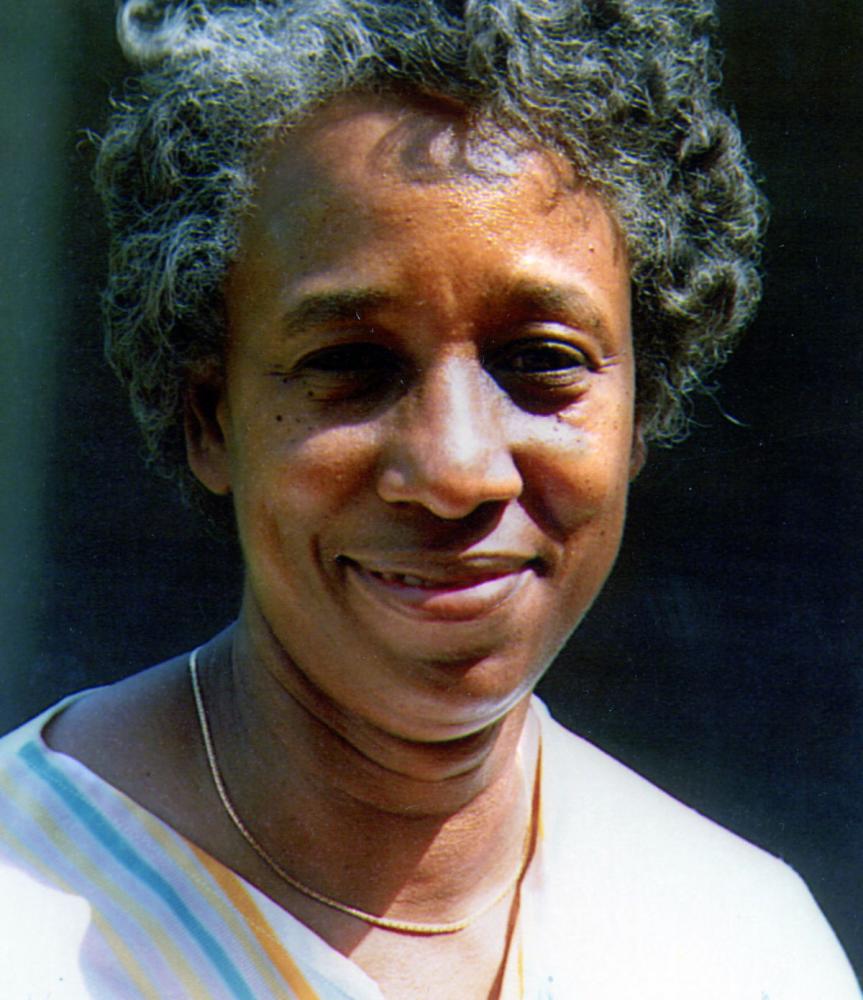
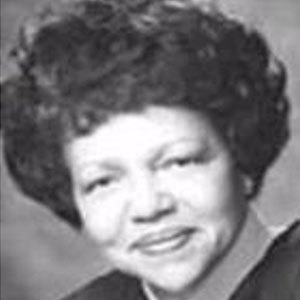
Geraldine Bledsoe Ford
Geraldine Bledsoe Ford photo

(1926 – 2003)

Geraldine Bledsoe Ford was the first black female in the United States to be elected to a judgeship. Born in 1926 in Detroit to attorney Harold E. Bledsoe and state civil servant Mamie Geraldine Bledsoe (herself a 1983 Michigan Women’s Hall of Fame honoree), Geraldine grew up in an atmosphere rich in discourse on the law, politics, and social equality. With actor, orator, and rights activist Paul Robeson a frequent dinner guest, as well as the preeminent community and civil rights leaders of the day, Geraldine was raised in an intellectually charged atmosphere that inspired achievement.

Her natural leadership qualities were apparent early. Ford was selected from a national pool of top high school students to meet President Franklin D. Roosevelt at the White House, before she graduated from Northern High School in 1944. Ford received her bachelor’s degree from the University of Michigan, and went on to earn a law degree in 1951 from Wayne State University. To gain legal experience after passing the Bar, Ford joined her father’s firm, Bledsoe, Ford and Bledsoe, which subsequently included her brother, William Bledsoe. Once a seasoned attorney, Ford channeled her expertise into public service, becoming the first black woman to attain the position of Assistant U.S. Attorney for the Eastern District of Michigan. Later, she would be distinguished as the first black woman to serve as Assistant Corporation Counsel for the City of Detroit.

Her most significant achievement against the greatest odds, however, would come in 1966, when she scored a stunning, upset victory to serve as judge on the Detroit Recorder’s Court. Although a black woman had never been elected to the bench before without benefit of prior appointment in the history of the United States, and her candidacy was surrounded by clouds of skepticism, Ford’s qualifications swept the election and she led the ticket repeatedly for the following 33 years. After a court reorganization, she served another year as a Circuit Court Judge, before retiring in 1999.

Ford participated in many professional organizations, served in appointed positions such as the Michigan Gaming Commission for Governor Engler, and received many prestigious awards, including an honorary Doctor of Law Degree from Alma College, the Distinguished Black Alumni Award from Wayne State University, and the Spirit of Michigan Award from the U. of M. Alumni Association, for which she served as the first black president.

Judge Geraldine Bledsoe Ford found it necessary to focus on the retention and development of students at the University of Michigan as a central component of the actualization of affirmative action. That actualization has allowed for the further development and service to the entire community that would otherwise not have been realized had it not been a focus need for African American professionals to be included in the mainstream and heart of American society.

----- Forwarded Message -----
From: Cuthbert Simpkins MD 
To: skipjen2865@aol.com <skipjen2865@aol.com>
Cc: 
Sent: Sunday, January 5, 2025 at 01:08:14 PM PST
Subject: Re: [BAL:] Elvin Harry Wanzo (Amherst College Class of 1938), Michigan Lawyer and Detroit Civil Rights Activist

Thank you so very much Skip for the information about Elvin Harry Wanzo. He is a hero who fought against enormous odds. He definitely deserves to be honored.

Peace,

Tuffy


On Tue, Dec 17, 2024 at 7:46 AM 'skipjen2865@aol.com' via AC Black Alumni Mailing List NonAffiliated <ac-black-alumni-mailing-list-nonaffiliated@googlegroups.com> wrote:


The next name on my Memorial List is Elvin Harry Wanzo, Amherst College Class of 1938. Elvin is a bit of an outlier.  He came from Toledo, Ohio, where his father, Elvin Burris Wanzo, was a prosperous funeral home owner. It is unknown how Elvin came to be at Amherst, but interestingly, once he arrived he settled into the Amherst College community by playing on the football team and by joining Alpha Theta Xi fraternity, the first record of any African American belonging to one of the College's fraternities. 

After graduating from Amherst College with a degree in history, Elvin returned to the Midwest by enrolling in the University of Michigan Law School.  Elvin became a lawyer and began practicing law in Detroit with a small private law firm.  He appears to have toiled in relative obscurity in the Detroit area from 1940 to 1968. However, in the early 1960s, Elvin became involved in a case that would last the better part of the decade and which would enable Elvin Wanzo to leave a mark.

 Below is the text of the case.  Read it to learn more about how certain cities used the power of eminent domain not necessarily to revitalize the city but rather to displace unwanted populations and to deprive those populations of their property .... and their wealth.   

To his credit, Elvin Wanzo saw the evil of this practice and did what he could to stop it.  One can only imagine the stress this type of struggle had on Elvin.  After all, he is listed as being alone in handling this case.  One can only imagine.

What is known is that Elvin ceased to practice law in Michigan in January of 1968, less than two years after the case had been decided. Elvin subsequently returned to his native Toledo, Ohio, where he died on August 30, 1971.  He was 55 years old.

 Peace, 

Everett "Skip" Jenkins
Class of 1975

8888888888888888888888888888888888888888888888888888888888888888888888888888888888888888888888888888888888888888888888888888888888888888888888888888888888888888888888888888888888888888888888888888888888888888

254 F. Supp. 655 (1966)

Thomas E. FOSTER and Georgia Lee Foster, Plaintiffs,
v.
CITY OF DETROIT, MICHIGAN, Defendant.

Civ. No. 21904.

United States District Court E. D. Michigan, S. D.

June 10, 1966.

*656 *657 Elvin H. Wanzo, Detroit, Mich., for plaintiffs.

Robert Reese, Corp. Counsel, Edward M. Welch, William Dietrich, Geraldine B. Ford, Asst. Corp. Counsel, Detroit, Mich., for defendant.

 
OPINION

KAESS, District Judge.

This is a class action under rule 23(a) (3) of the Federal Rules of Civil Procedure brought by the named plaintiffs, Thomas E. Foster and Georgia Lee Foster, in behalf of themselves and other property owners similarly situated. It arises out of condemnation proceedings instituted by the City of Detroit, Michigan, in the state court in 1950 against certain property in the city.

On August 16, 1962, this court issued an order dismissing the action for lack of jurisdiction. This order was reversed by the Court of Appeals for the Sixth *658 Circuit and the case remanded to this court with directions to take jurisdiction in the matter and hear and decide the case on its merits. Foster v. Herley, 330 F.2d 87 (6th Cir. 1964). The Circuit Court held that jurisdiction exists under Section 1331, Title 28, United States Code[1], as the plaintiffs seek to enforce a right which has its origin in the Constitution of the United States, which right will be supported if the Constitution is given one construction and will be defeated if the Constitution is given another construction. Foster v. Herley, supra, page 91.

The question of the jurisdiction of this court over the subject matter of the action has again been raised by defendant and has been argued extensively, both orally and in the briefs filed by counsel for the respective parties.[2] This court finds these arguments to be, not only repetitious, but irrelevant. The Court of Appeals has directed this court to take jurisdiction and hear the case on its merits. This conclusively settles the question in this court of its jurisdiction of the litigation. Sherwin v. Welch, 319 F.2d 729 (D.C.Cir. 1963); Paull v. Archer-Daniels-Midland Co., 313 F.2d 612 (8th Cir. 1963). Deauville Associates v. Murrell, 180 F.2d 275 (5th Cir.), cert. denied, 340 U.S. 821, 71 S. Ct. 54, 95 L. Ed. 603, rehearing denied, 340 U.S. 893, 71 S. Ct. 204, 95 L. Ed. 648 (1950); A. M. Webb & Co. v. Robert P. Miller Co., 176 F.2d 678 (3rd Cir. 1949). It is now incumbent upon this court to pass upon the merits of the case.

Although the proofs presented by both parties to the action are not as complete as is normally desirable, the court finds the facts to be as follows.

On February 7, 1949, the Detroit Housing Commission, in anticipation of favorable public housing legislation by the 81st Congress of the United States, recommended to the Common Council of the City of Detroit that certain vacant land sites and certain slum clearance sites be approved as proposed public housing sites. The slum clearance sites included an area bounded generally by Waterloo, Chene, Larned and Dequindre Streets, and known as the "Mich. 1-11" area.[3] On February 14, 1949 the Common council approved these recommendations as a basis for the preparation of applications for federal loan contracts for 14,350 public housing units, and directed the Corporation Counsel for the City of Detroit to prepare and submit to the Council for approval the proper resolutions for the condemnation of these sites, directed the Department of Buildings and Safety Engineering to refer to the Council all applications for building permits in these sites, and provided that any protests received in relation to any of these sites would be referred to the City Plan Commission for public hearings and further report prior to action by the Council.[4]

*659 On June 7, 1950, pursuant to a resolution adopted by the Common Council on April 25, 1950[5], the Corporation Counsel filed a petition in Recorder's Court (Condemnation Case No. 2073) for the acquisition of property in the City of Detroit bounded by Dequindre (Grand Trunk Railroad Right of Way), Chene, Macomb and Clinton Streets, part of the "Mich. 1-11 area". A lis pendens was filed with the Register of Deeds for Wayne County, and form letters advising that condemnation was about to be started were sent out to plaintiffs and all other persons having an interest in properties in the area.

Subsequently, a petition and an order consolidating and regrouping the various parcels to be condemned were filed pursuant to a resolution adopted by the Common Council on September 29, 1953, ordering such regrouping. On June 1, 1954 the City of Detroit acquired by condemnation the area bounded by St. Aubin, Chene, Madison and Mullett Streets, which was part of the area known as "Mich. 1-11".[6] However, no public housing was ever built on this site or any sites in the "Mich. 1-11" area, as the Detroit Housing Commission was never able to reach an agreement with the Public Housing Administration on the type of structures or labor costs therefor. In 1955 the Federal Housing Administration issued a stop order prohibiting further action.[7] On June 16, 1960, a motion and order discontinuing the petitions for acquisition of property and lis pendens filed in the pending cases were filed as authorized by the Common Council on May 31, 1960.[8]

Meanwhile, on November 18, 1959 the Detroit City Plan Commission approved the submittal of an application to the Urban Renewal Administration for Elmwood Park Rehabilitation Project #1, located in the area generally bounded by Vernor, Chene, Lafayette and the Grand Trunk Railroad, which encompassed the altered "Mich. 1-11" site.[9] On January 13, 1961 the development plan for this project was approved. On May 3, 1961, the City Plan Commission approved submission of a planning application to the Urban Renewal Administration for Elmwood Park Rehabilitation Project #2 for the area bounded by Lafayette, Elmwood, Jefferson, and the Grand Trunk Railroad, which encompassed part of the original "Mich. 1-11" site. Condemnation proceedings were again instituted in the Recorder's Court against the property in the "Mich. 1-11" area, which as of now has been completely cleared.[10]

The named plaintiffs, Thomas E. and Georgia L. Foster, during the period in question owned 3 parcels of land located in the "Mich. 1-11" area, on St. Aubin, between Macomb and Clinton Streets. Lot 30 at 1312 St. Aubin contained a two-story frame dwelling with an apartment on each floor. Lot 28 at 1304 St. Aubin contained a brick building with a store downstairs and an apartment upstairs. In between these parcels was lot 29, a vacant lot.[11]

*660 The plaintiffs received a letter in August of 1949 informing them of the city's interest in condemning their property and requesting that they attend a meeting at the city hall. At this meeting, attended by approximately 200 persons, no objections to the condemnation were heard and those attending were told that they would be further notified at a later date. In the spring of 1950 the plaintiffs received a letter from the office of the corporation counsel, notifying them of the initiation of condemnation proceedings and requesting them to fill out a questionnaire relating to the ownership of the property and directing them to see the Director of Real Estate, 945 Griswold Building in Detroit, if they had any questions. Some time after receiving this letter, plaintiff Thomas Foster went to the Griswold Building, where he discussed the matter with a person he understood to be the official named in the letter, who told him that plaintiffs were not to improve their property in an attempt to get more money from the city and that plaintiffs would be notified when the property was to be taken. Plaintiffs' property was never taken under the action filed in 1950, which was discontinued in 1960.

In 1949 plaintiffs were renting both floors of each of these dwellings, receiving $50.00 for each of the upper apartments and $55.00 for each of the lower apartments. Some time in 1949, plaintiffs received a notice of certain building code violations and spent $1,700.00 to make the building at 1312 St. Aubin conform to building and safety regulations.

Plaintiffs' property was occupied from 1950-1954 for approximately the same rentals as plaintiffs were receiving in 1949. However, after 1954 when the several blocks adjacent to plaintiffs' property were condemned and razed by the city, plaintiffs were unable to obtain tenants. The property at 1304 was never occupied after that time. The upper flat at 1312 was rented until September of 1956, and for a short time thereafter was occupied by a non-paying tenant. After 1954 the buildings deteriorated rapidly. The dwelling at 1304 was broken into and damaged so often from 1954 to 1958 that the police finally refused to investigate. The boards over the doors and windows were repeatedly torn off, the plumbing and wiring were ripped out, and anything movable was carried away. Similar vandalization of the building at 1312 occurred during 1957 and 1958. After 1955 plaintiffs were unable to obtain insurance on the property at 1312 and in 1954-56 were able to insure the property at 1304 only at a rate 1½ times that charged in 1951. On July 16, 1958 plaintiffs received notices from the Detroit Department of Building and Safety Engineering that the buildings were dangerous and had to be put in a safe condition or be torn down. After several unsuccessful attempts to have the city demolish the buildings and deduct the cost from the eventual condemnation award, plaintiffs paid a private contractor $1,500.00 to tear them down.

After the buildings were demolished plaintiffs owned three vacant lots. In 1961 condemnation proceedings were again initiated against plaintiffs' property, and on February 2, 1963 plaintiffs received $5,200.00, which valuation defendant admits to be the fair cash market value thereof at the time the property was acquired.[12]

Plaintiffs contend that the City of Detroit denied them the due process of law guaranteed by the Fourteenth Amendment to the Constitution of the United States by depriving them of their property without just compensation. They assert that the city deprived them *661 of the full use, benefits and rights of ownership in the property to such an extent as to amount to a "taking" for which just compensation is required under the Fifth Amendment to the Constitution of the United States, by causing and permitting the threat of imminent condemnation to hang over their property for ten years, all the while encouraging the decay and desertion of the area, and then discontinuing the action and instituting new proceedings with appraisals based on the lower values of vacant property in a, by this time, blighted area.

The Fifth Amendment to the United States Constitution provides:

 
"No person * * * shall be compelled in any criminal case to be a witness against himself, nor be deprived of life, liberty, or property, without due process of law; nor shall private property be taken for public use without just compensation."

This requirement of just compensation for the taking of private property for public use has been held for more than half a century to apply to the states, as it is incorporated into the meaning of "due process" required by the Fourteenth Amendment to the United States Constitution.[13] Chicago, B. & Q. R. R. v. City of Chicago, 166 U.S. 226, 236, 17 S. Ct. 581, 41 L. Ed. 979 (1897), cited with approval in Malloy v. Hogan, 378 U.S. 1, 4, 84 S. Ct. 1489, 12 L. Ed. 2d 653 (1963). See also Griggs v. Allegheny County, 369 U.S. 84, 82 S. Ct. 531, 7 L. Ed. 2d 585 (1961); Backus v. Fort Street Union Depot Co., 169 U.S. 557, 18 S. Ct. 445, 42 L. Ed. 853 (1898); Fallbrook Irrigation District v. Bradley, 164 U.S. 112, 17 S. Ct. 56, 41 L. Ed. 369 (1896).

The question is not merely whether the procedure by which plaintiffs' land was condemned complied with the requirements of due process, in that plaintiffs had due notice of the proceedings, had the right to appear in court, had the right to make motions to the court to dismiss or otherwise protect their rights, and had the right to make a defense. The question is whether the city although complying with the statutory procedures, which provide procedural due process, has, nevertheless, taken plaintiffs' property without just compensation.[14] As was stated by Justice Harlan in the Chicago, Burlington & Quincy Railroad opinion (supra at page 234, 17 S.Ct. at page 584):

 
"But a state may not, by any of its agencies, disregard the prohibitions of the fourteenth amendment. Its judicial authorities may keep within the letter of the statute prescribing forms of procedure in the courts, and give the parties interested the fullest opportunity to be heard, and yet it might be that its final action would be inconsistent with that amendment. In determining what is due process of law, regard must be had to substance, not to form."

The first question which must be determined is whether the actions of the city caused or contributed to the decline in value of plaintiffs' property to such an extent as to amount to a "taking" of the property. Defendant contends that the plaintiffs' property, like the entire area, *662 was old, run down, dirty, and uninhabitable in 1950 when the condemnation proceedings were started[15]; that over 75% of the properties were owned by absentee landlords and occupied by renters, which fact is always essential in the deterioration of a neighborhood; and that the massive decrease in tenancy in the area was comparable to a current nationwide trend of abandonment of the older, decayed, central core of the large metropolitan cities of the United States. As reason for this abandonment the city points to the exodus of Detroiters to the suburban areas which made newer and better housing available in the city, and the decision of the United States Supreme Court preventing state courts from enforcing private restrictive covenants which bar potential real estate purchasers on account of race, creed or color.[16]

There is no doubt but that these were important factors in the deterioration of this area in general and that they provide a partial explanation of the emigration from the area. However, there is substantial evidence that the city actually encouraged and aggravated this deterioration after the commencement of the proceedings through the actions of various city officials. These actions include, informing plaintiffs that they would receive no compensation for improvements and that they were only to "keep the roof on and the water running", requiring the signing of a "Waiver of Claim for Damages" as a condition precedent to the issuance of a building permit,[17] actually completing the condemnation and clearance of several blocks in the area, requiring the razing of many vandalized buildings, and keeping the lis pendens in effect for five years after the Public Housing Administration had issued a stop order on the project, all the while telling those who inquired that the property would be condemned soon. There is also evidence that the lis pendens had the effect of impairing sales of property, thus reducing sales prices and values. Therefore, this court finds, as a matter of fact, that the protracted delay and the actions of the defendant, if they were not the only causes, substantially contributed to, hastened and aggravated the deterioration and decline in value of the area in general and of plaintiffs' property in particular.

Next, it must be determined whether the actions of the city causing the decline were such as to amount to a "taking" of the property for which just compensation is required. Defendant contends that even if such actions did cause a decline in the value of property, such decline is merely a consequence of condemnation, and that if any such "consequential" damages were sustained, they must be considered as a part of the burden of citizenship shared by each man in common with the other. Mitchell v. United States, 267 U.S. 341, 45 S. Ct. 293, 69 L. Ed. 644 (1925); Kimball Laundry Co. v. United States, 338 U.S. 1, 69 S. Ct. 1434, 93 L. Ed. 1765 (1949); United States v. Causby, 328 U.S. 256, 66 S. Ct. 1062, 90 L. Ed. 1206 (1946). Defendant asserts that the only "taking" of plaintiffs' property occurred in 1963 when the award was determined and the compensation secured, that damage to the property must amount to the taking of an easement before compensation is required, and that plaintiffs' proper remedy for any damages caused by the delay was by independent action against the city for negligence.

Generally, the term "taking" is construed in its literal sense, that is, a taking occurs when the verdict is confirmed, the deed executed, and the award paid. There are, however, special situations *663 where the actions of a governmental body are such as to amount to a taking of private property, regardless of whether there is an eminent domain proceeding, and in such situations, compensation is given for the taking when it occurs. The United States Supreme Court has held that a taking occurs when the use and enjoyment of land is reduced by the noise and vibration of regular and frequent flights of airplanes at low altitudes over the property, where the government fires projectiles over the land during artillery practice, where the agricultural value of land is destroyed by underflow from a government dam, where gases and smoke are forced from the mouth of a railroad tunnel near property in such a manner as to render it less habitable and to depreciate it in value, and where the government's temporary condemnation of a business property has the inevitable effect of depriving the owner of the going-concern value of his property, even where the government did not avail itself of such going-concern value. Griggs v. Allegheny County, 369 U.S. 84, 82 S. Ct. 531, 7 L. Ed. 2d 585 (1963); United States v. Causby, supra; Portsmouth Harbor Land & Hotel Co. v. United States, 260 U.S. 327, 43 S. Ct. 135, 67 L. Ed. 287 (1922); United States v. Kansas City Life Ins. Co., 339 U.S. 799, 70 S. Ct. 885, 94 L. Ed. 1277 (1950); Richards v. Washington Terminal Co., 233 U.S. 546, 34 S. Ct. 654, 58 L. Ed. 1088 (1941); United States v. General Motors Corp., 323 U.S. 373, 65 S. Ct. 357, 89 L. Ed. 311 (1945); Kimball Laundry Co. v. United States, 338 U.S. 1, 13, 69 S. Ct. 1434, 93 L. Ed. 1765 (1949).

The Michigan Supreme Court has in several cases awarded compensation where a governmental agency has by deliberate acts reduced the value of private property and thereby deprived the owner of the full use and value of his property. See Long v. City of Highland Park, 329 Mich. 146, 45 N.W.2d 10 (1950); Grand Trunk Western R. R. v. City of Detroit, 326 Mich. 387, 40 N.W.2d 195 (1949), both cases where the city attempted to render properties, through the zoning laws, of little value and to then condemn them; Pearsall v. Board of Supervisors of Eaton County, 74 Mich. 558, 42 N.W. 77, 4 L.R.A. 193 (1889), a road closing case;[19] and Ranson v. City of Sault Ste. Marie, 143 Mich. 661, 107 N.W. 439, 15 L.R.A.,N.S., 49 (1906), a similar case in which the city restricted access to plaintiffs' property.

The contention of defendant that the damage to plaintiffs' property must be such as to amount to the taking of an easement before compensation is required simply cannot be accepted. If it were, condemning authorities could deprive thousands of property owners of the "just compensation" to which they are entitled under the Fourteenth Amendment, by the simple procedure of commencing a condemnation action, prolonging it while they encourage deterioration of the area by filing a lis pendens, tearing down some buildings, ordering welfare tenants to move, etcetera, and then abandoning it and commencing new proceedings at which awards are based solely on value at that time. Although, the United States Supreme Court in the Griggs and Causby cases held that the interference with property was such as *664 to amount to the taking of an air easement over the property, the Supreme Court has in no wise intimated that there must be an easement before a "taking" in the constitutional sense occurs.

Indeed, that court said, in United States v. General Motors Corp., supra, 323 U.S. at page 378, 65 S.Ct. at page 359:

 
"In its primary meaning, the term `taken' would seem to signify something more than destruction, for it might well be claimed that one does not take what he destroys. But the construction of the phrase has not been so narrow. The courts have held that the deprivation of the former owner rather than the accretion of a right or interest to the sovereign constitutes the taking. Governmental action short of acquisition of title or occupancy has been held, if its effects are so complete as to deprive the owner of all or most of his interest in the subject matter, to amount to a taking."

The question of whether actions such as occurred here amount to a "taking" in the constitutional sense has not yet been faced by the Supreme Court. However, the courts of several states, including Michigan, have recently considered the question. The Michigan Supreme Court, in City of Detroit v. Cassese, 376 Mich. 311, 136 N.W.2d 896 (1965), a case arising out of the same factual situation, held that acts by the city, such as filing lis pendens, sending letters to tenants advising of the impending condemnation, making intense building department inspection and citations against owners for any violations of the building code, razing of vacant and vandalized buildings, refusing to issue permits for substantial improvements, etcetera, would constitute a taking of a property.

This conclusion is supported by the decision in City of Cleveland v. Carcione, 118 Ohio App. 525, 190 N.E.2d 52, 5 A.L. R.3d 891 (1963), which held that the depreciation in value of a parcel of property at the time of appropriation, where the property is included in a general plan of condemnation, should not be borne by the owner. In the Carcione case, plaintiffs' property was part of a large area designated as an urban renewal site in 1957, at which time city and county welfare departments instructed plaintiffs' tenants to move. The city then began to raze the buildings piecemeal as it acquired title and by the time plaintiffs' property was condemned only 35-40 structures remained in a vast area where nearly 600 buildings had stood. The Ohio court held that the value of plaintiffs' property should be based on its fair market value immediately before the city took active steps to carry out the work of the project which to any extent depreciated the value of the property.[20]

The logic and fairness of such an approach is apparent when it is realized that where condemnation proceedings tend to increase the value of property, the property owner is not entitled to the increased value. United States v. Chandler-Dunbar Co., 229 U.S. 53, 33 S. Ct. 667, 57 L. Ed. 1063 (1913); Shoemaker v. United States, 147 U.S. 282, 13 S. Ct. 361, 37 L. Ed. 170 (1893); Anderson v. United States, 179 F.2d 281. (5 Cir., 1950), Murray v. United States, D.C.App.1942, 76 U.S.App.D.C. 179, 130 F.2d 442.

As is said in 3 Lewis, Eminent Domain, § 1329 (3rd Ed. 1909):

 
"If the proposed improvement had depreciated the value of the property, it *665 would be very unjust that the condemning party should get it at its depreciated value; and that the correct rule would seem to be that the value should be estimated irrespective of any effect produced by the proposed work * * *."[21]

Defendant's contention that plaintiffs were not deprived of just compensation because they had an opportunity to file an action for negligence against the city, and that damages for delay are not compensable in the condemnation action, is unacceptable. A second condemnation action was commenced shortly after the first was discontinued. Plaintiffs had every right to believe that they would be fairly compensated in that action, as indeed they should have been. The Michigan Supreme Court in Cassese held that the actions of the city in the first action, which might amount to a "taking", were compensable in the second action. Similarly, in Carcione the Ohio court held that the affirmative actions of the City of Cleveland which lowered the value of plaintiffs' property were compensable in the condemnation action. There is no logic or fairness in a procedure which prevents a party from receiving full compensation in the condemnation proceedings for all of his property which has been taken and forces him to bring an independent action for damages in which he must show fraud or negligence.

A statement which is apropos here was made by the Pennsylvania Supreme Court in Hermann v. North Pennsylvania R. R., 270 Pa. 551, 113 A. 828 (1921), involving a state statute providing that it was unlawful to erect a building on a plotted, but unopened street, and that when the street was opened the buildings were to be removed at the owner's expense. This statute had an adverse effect on the value of property located on such plotted streets, and the court, in passing upon the damages available upon condemnation when the street was opened, said:

 
"We have repeatedly decided that no damages are collectable until a legal opening occurs, by the actual taking of land * * * but in Re South Twelfth Street, 217 Pa. 362, 366, 66 A. 568, 569, while acknowledging this rule, we recognized also that any `impairment of value' resulting from the plotting of a street in anticipation of its opening must be viewed `as the immediate consequence of steps * * * toward the [eventual] appropriation * * * of the owner's land.' When the appropriation takes place, this `impairment of value' from these preliminary steps becomes merged, as it were, in the damages then payable; the matter being worked out practically in assigning the damages, by simply ignoring the detrimental effect of the plotting, and treating the value of the property as though there had been no such harmful results.
 
"If the course just outlined were not followed at the time of the appropriation the law, in justice to the owner, would have to pursue the somewhat impractical method of considering two separate items: (1) The early impairment of value, suffered by the owner from the plotting; and (2) the damages to the real estate, as thus impaired, caused by the subsequent taking of the land.
 
"Otherwise, as said in Re South Twelfth Street, supra, we would have illegal `confiscation * * * fully disguised.' This complication is avoided, however, in the practical manner indicated." Pages 828-829, 113 A. page 829.

Thus, this court now holds that the actions of the defendant which substantially contributed to and accelerated the decline in value of plaintiffs' property constituted a "taking" of plaintiffs' property within the meaning of the Fifth *666 Amendment, for which just compensation must be paid.

It is not disputed that the value placed upon plaintiffs' property at its eventual condemnation in 1963 was its value at that time and that the award received by plaintiffs did not include any compensation for the decline in value of plaintiffs' property during the pendency of the first condemnation proceedings.[22] Thus, plaintiffs did not receive just compensation for the taking of their property.

Normally, it is the function of the condemnation jury to decide when the taking occurred and the value of the property at that time. However, in order that plaintiffs be granted the damages to which they are entitled for the deprivation of their property without due process, it is necessary to determine what would have constituted just compensation.

Although there is some difference of opinion among the authorities as to the method of establishing just compensation,[23] the most widely used formula is the difference between the value of the property before and after the taking.[24] In the Cassese case, the Michigan Supreme Court set out the following formula:

 
"First, the date of taking should be determined. Next, the value of the property as of that date is to be ascertained. There should be deducted from the award any amounts that accrued to the owner from his possession of the property or that reflect the value of its use following the taking. In the instant case this would consist of the rentals which Cassese received for parcel 663 and the land contract payments which he received for Parcel 495, less any expenses in connection with maintenance, upkeep or repossession, of the properties, such as water and light bills, insurance, taxes, etc. Finally, interest should be added from the date of taking to the date of award."

The formula set forth in Cassese may appropriately be applied here. However, because of the different procedural context in that case and the one at bar, the amount of the award received by plaintiffs must be deducted from the value of the property as of the time of taking.[25]

In Carcione v. City of Cleveland, supra, the correct date of valuation of the property was held to be the date immediately before the city took any steps to carry out the work of the project which to any extent depreciated the value of the property. However, from the proofs presented at the trial of the present case, it does not appear that the actions of the city had a substantial effect on the property of these plaintiffs until 1954. It was in 1954 that plaintiffs found themselves able to rent only one of the four apartments, and that at a much lower rental. At that time people began moving out of the area in large numbers, vandalism increased greatly, building inspections were increased and enforcement of building codes tightened, insurance became unavailable, and the property became virtually useless to plaintiffs. This court concludes that the taking of plaintiffs' property occurred during the latter part of 1954 and that plaintiffs were entitled to just compensation for their property as of that time.

*667 Very little proof as to the actual value of plaintiffs' property in 1954 was adduced at the trial, and this court cannot speculate as to what such value may have been. However, appraisals made for the city, dated December 15, 1954, provide evidence of at least the minimum value of the property at that time. The lack of proof of greater value should not prevent the plaintiffs from receiving at least this minimum value. As in the formula set forth in Cassese, there must be deducted from this amount any amounts which accrued to plaintiffs from their possession of the property after December 1, 1954 (e. g. rentals), less any expenses in connection with the maintenance and upkeep of the properties. Plaintiffs are also entitled to the cost of demolition, as that is an expense which normally is, and should be, borne by the condemning authority. However, they are not entitled to any lost rents after December 31, 1954, and indeed must credit defendant with any rent received after that date. Nor are they entitled to the amount spent on improvements or repairs in 1949, as there is no proof that this expenditure affected the value in 1954. The plaintiffs are entitled to the difference between the amount computed by this formula and the award received in 1963, plus interest.

The final issue facing the court is whether plaintiffs have established a class action under Rule 23(a) (3) of the Federal Rules of Civil Procedure and, if so, whether the unnamed plaintiffs may intervene after the determination of defendants' liability to share in the fruits of the judgment obtained by the named plaintiffs. Rule 23(a) provides:

 
"If persons constituting a class so numerous as to make it impracticable to bring them all before the court, such of them, one or more, as will fairly insure the adequate representation of all may, on behalf of all, sue or be sued, when the character of the right sought to be enforced for or against the class is * * * (3) several, and there is a common question of law or fact affecting the several rights and a common relief is sought."

Defendant contends that the class of persons on whose behalf the action is brought has not been adequately identified, that there is no showing that these persons are so numerous that they cannot be brought before the court, that named plaintiffs do not adequately represent the class, that there is no showing that each member of the class has a claim for the minimum jurisdictional amount, and that there are not sufficient questions of law or fact in common to warrant a class action.

To the contrary, the class has been identified as consisting of those property owners within the "Mich. 1-11" area who have been subject to the dual condemnation actions here involved. Clearly, the number of persons in an area encompassing nearly 25 city blocks is too large for it to be practicable to bring them all before the court.[26] Plaintiffs, as members of the class, with no interests in conflict with the class, are such persons as will "fairly insure the adequate representation" of the class.[27] As for the alleged failure to show the jurisdictional amount, the cases are in conflict as to whether each intervening plaintiff must, as to his own claim, meet all of the jurisdictional requirements as to the amount in controversy.[28] However, *668 it is not necessary to pass on this question at this time, as no one has as yet attempted to intervene with less than the required amount in controversy.

Defendant strongly asserts that while there may be some common questions of fact or law, they are not sufficient to warrant a class action, especially in view of the number and variety of proofs relating to each separate parcel of property. Defendant relies heavily upon the case of Keavy v. Anthony, 2 F.R.D. 19 (D.R.I.1941), in which the court refused to allow numerous property owners to maintain a class action against municipal officials for destruction of houses damaged in a hurricane, on the ground that there were so many different questions of law and fact affecting the several rights that the jury might be confused. The court indicated that it was unwilling to open up a new field of litigation in the federal courts on such facts. However, in the present case there are important common questions of law and fact affecting all members of the class which override the factual differences regarding the damages suffered by each individual. Thus, it appears that a class action under Rule 23(a) (3) is proper in this situation.[29]

Finally, the courts have been divided upon the question of intervention by members of the class after the rendition of a favorable verdict. One line of authority is to the effect that rule 23(a) (3) is merely a permissive joinder device, and that consequently only those persons who are actually parties to the litigation may share in the judgment.[30] Other courts, in cases where there has been an identifiable class, have allowed unnamed plaintiffs to share in the judgment obtained by their representatives, insofar as each is able to prove both membership in the class and damages.[31] As stated by Justice Murrah in the Union Carbide decision, "the latter solution undoubtedly results in the more expeditious and efficient disposition of litigation and ought therefor to be favored."[32] The view favored by Justice Murrah has been followed in the more recent cases, and appears to be more in accord with the concept and *669 purpose of class actions. It is, therefore, adopted by this court.

The unnamed plaintiffs will have a period of six months, in which to appear and file claims before a special master who will determine their membership in the class and the extent, if any, of their damages, in accordance with the formula adopted in this opinion. The City of Detroit will be required to make available the 1954 appraisals on the property. However, if any claimant can prove that the value of his property was greater he may do so. Likewise the defendant is not precluded from proving that a claimant is not entitled to damages, by reason of his possession and use of the property after the taking, or for any other reason. If, in the process of identifying the members of the class and assessing the amounts of their respective damages, unresolved questions of fact or law are disclosed, they may be submitted to the court for determination. See, Union Carbide & Carbon Corp. v. Nisley, supra; Rule 53, Federal Rules of Civil Procedure.[33]

NOTES

[1] "The district courts shall have original jurisdiction of all civil actions wherein the matter in controversy exceeds the sum or value of $10,000, exclusive of interest and costs, and arises under the Constitution, laws, or treaties of the United States." 28 U.S.C. § 1331.

[2] Defendant's main contention is that plaintiffs had an adequate remedy in the state courts, either in the original condemnation proceeding, the later condemnation proceeding, or in an original action, and that having failed to pursue these state remedies plaintiffs cannot now look to the federal court for redress. Plaintiffs, in turn, contend that there is no adequate remedy available to them in Michigan for damage caused by abuse of the power of eminent domain.

[3] Studies leading to selection of this area for public housing purposes were begun in 1948. Answer to Interrogatories for City Plan Commission, paragraph 5.

[4] Journal of the Common Council, p. 380. A total of 7 cases were brought pursuant to this resolution: Case #2071 (June 7, 1950); Case #2072 (June 7, 1950); Case #2073 (June 7, 1950); Case #2077 (June 19, 1950); Case #2109 (April 10, 1951); Case #2119 (June 27, 1951); Case #2129 (August 21, 1951).

[5] Journal of the Common Council, p. 1014-1034.

[6] Condemnation cases #2109 and #2129.

[7] There is no document on file verifying this order or giving the precise date thereof. However, as both parties apparently acknowledge its existence, it is accepted as a fact.

[8] Journal of the Common Council, p. 975.

[9] On April 18, 1950 (Journal of the Common Council, page 935) the Common Council added the block bounded by Waterloo, St. Aubin, Sherman and Chene. On August 12, 1952 the Common Council deleted the block bounded by Congress, St. Aubin, Larned and the Grand Trunk Railroad (Journal of the Common Council, p. 1901). On January 2, 1957 the Common Council deleted the block bounded by Waterloo, St. Aubin, Joy and the Grand Trunk Railroad, and the 14 blocks remaining in the area bounded by Macomb, Chene, Larned and the Grand Trunk Railroad (Journal of the Common Council, p. 2748).

[10] Case #2450, commenced Nov. 11, 1961; Case #2451, commenced Feb. 2, 1962; Case #2452, commenced April 4, 1962.

[11] These three parcels were lots 28, 29 and 30 of the William B. Wesson's Subdivision of Lot 21, St. Aubin Farm, Detroit, Wayne County, Michigan. The parcel at 1312 St. Aubin was purchased on December 6, 1940 for $4,500.00. The parcel at 1304 St. Aubin was purchased on a land contract in April of 1944 for $6,000.00, the deed passing on July 3, 1954. The vacant lot, located between 1304 and 1312 St. Aubin, was purchased on January 15, 1946 for $1,000.00.

[12] The original complaint in instant action was filed November 22, 1961.

[13] The relevant part of the Fourteenth Amendment provides: "No State shall make or enforce any law which shall abridge the privileges or immunities of citizens of the United States; nor shall any State deprive any person of life, liberty, or property, without due process of law; nor deny to any person within its jurisdiction the equal protection of the laws."

[14] Questions going to "property", "taking", "just compensation" and "payment" are all facets of the central federal question of denial of due process and there is the possibility of a federal question in every taking by eminent domain under state authority, even if all requirements of state law have been complied with. McCoy v. Union Elevated Ry., 247 U.S. 354, 38 S. Ct. 504, 62 L. Ed. 1156 (1918); Monongahela Nav. Co. v. United States, 148 U.S. 312, 13 S. Ct. 622, 37 L. Ed. 463 (1893); Chicago B. & Q. R. R. v. City of Chicago, supra; 18 Am.Jur. Eminent Domain § 4 P. 633 (1938); Kauper, Basic Principles of Eminent Domain, 35 Mich.S.B.J. 10, 12 (1958).

[15] The appraisals of plaintiffs' property prepared for the city in 1954, described the dwellings as being very old and greatly depreciated, with falling plaster, exposed wiring and unsatisfactory sanitary facilities. See plaintiffs' exhibits 12 and 14.

[16] Shelley v. Kraemer, 334 U.S. 1, 68 S. Ct. 836, 92 L. Ed. 1161 (1948).

[17] By filing such a document the property owner formally waived any claim to the increased value of the property as a result of the improvement. See plaintiffs' Exhibit 17.

[19] In Pearsall the court stated, at page 562, 42 N.W. 77:

"* * * the term `taking' should not be used in an unreasonable or narrow sense. It should not be limited to the absolute conversion of property, and applied to land only; but it should include cases where the value is destroyed by the action of the government, or serious injury is inflicted to the property itself, or exclusion of the owner from its enjoyment, or from any of the appurtenances thereto. * * *

"If the public take any action which becomes necessary to subserve public use, and valuable rights of an individual are thereby interfered with, and damaged or destroyed, he is entitled to the compensation which the constitution gives therefor, and such damage or destruction must be regarded as a `taking.'"

Quoted with approval, in City of Detroit v. Cassesse, 376 Mich. 311, 313, n. 1, 136 N.W.2d 896 (1965).

[20] Several other state courts have recently considered the problems of depreciation in the value of condemned property resulting from the prospect or commencement of the eminent domain proceedings, and have held that such depreciation should not enure to the benefit of the condemnor. Lower Nueces River Water Supply Dist. v. Collins, 357 S.W.2d 449 (Tex.Civ.App.1962); State, through Department of Highways v. Clark, 135 So. 2d 329 (La.App.1961); Buena Park School District v. Metrim Corp., 176 Cal. App. 2d 255, 259, 1 Cal. Rptr. 250 (1959), quoted with approval in People ex rel. Dept. of Public Works v. Lillard, 219 Cal. App. 2d 368, 33 Cal. Rptr. 189 (1963); Congressional School of Aeronautics, Inc. v. State Roads Commn., 218 Md. 236, 146 A.2d 558 (1958).

[21] See also, 1 Orgel, Valuation Under Eminent Domain §§ 105-106 (2d Ed. 1953).

[22] See paragraph 12 of defendant's answer to plaintiffs' second amended complaint.

[23] See, e. g., 3 Nichols, Eminent Domain, § 8.643 n. 3 (3rd Ed. 1965).

[24] Dugan v. Rank, 372 U.S. 609, 83 S. Ct. 999, 10 L. Ed. 2d 15 (1963); see Dettleback, Just Compensation for Real Estate Condemnation. 15 Cleve.Mar. L.Rev., 171, 174 (Jan. 1966).

[25] The Cassese case involved a direct appeal to the Michigan Supreme Court from the award granted the property owner in the second condemnation proceeding. The Supreme Court remanded the action to the Recorder's Court for a new trial with the award to be computed following the formula set forth in the opinion. In the instant case the award received by plaintiffs in the Recorder's Court action, not having been appealed, has become final.

[26] There is in the record of this case a list of well over 50 such persons who are potential intervenors.

[27] Furthermore, it appears that plaintiffs were chosen at a group meeting to represent the class in the matter.

[28] Compare, Newsom v. E. I. Dupont DeNemours, 173 F.2d 856 (6th Cir.), cert. denied, 338 U.S. 824, 70 S. Ct. 70, 94 L. Ed. 500 (1949); Knowles v. War Damage Corp., 83 U.S.App.D.C. 388, 171 F.2d 15, cert. denied, 336 U.S. 914, 69 S. Ct. 604, 93 L. Ed. 1077 (1948); Ames v. Chestnut Knolls, Inc., 159 F. Supp. 791 (D.Del.1958), with Hunter v. Southern Indemnity Underwriters, 47 F. Supp. 242 (D.Ky.1942); Hess v. Anderson Clayton & Co., 20 F.R.D. 466, 477-478 (D.Cal. 1957) (dictum).

[29] The amendment to Rule 23 promulgated by the United States Supreme Court on Feb. 1, 1966, which will take effect July 1, 1966, appears to lend support to this interpretation of the present rule. The amended rule provides, inter alia:

RULE 23. CLASS ACTIONS

(a) Prerequisites to a Class Action. One or more members of a class may sue or be sued as representative parties on behalf of all only if (1) the class is so numerous that joinder of all members is impracticable, (2) there are questions of law or fact common to the class, (3) the claims or defenses of the representative parties are typical of the claims or defenses of the class, and (4) the representative parties will fairly and adequately protect the interests of the class.

(b) Class Actions Maintainable. An action may be maintained as a class action if the prerequisites of subdivision (a) are satisfied, and in addition: * * *

(3) the court finds that the questions of law or fact common to the members of the class predominate over any questions affecting only individual members, and that a class action is superior to other available methods for the fair and efficient adjudication of the controversy. The matters pertinent to the findings include: (A) the interest of members of the class in individually controlling the prosecution or defense of separate actions; (B) the extent and nature of any litigation concerning the controversy already commenced by or against members of the class; (C) the desirability or undesirability of concentrating the litigation of the claims in the particular forum; (D) the difficulties likely to be encountered in the management of a class action.

[30] E. g. Oppenheimer v. F. J. Young & Co., 144 F.2d 387 (2nd Cir. 1944); Weeks v. Bareco Oil Co., 125 F.2d 84, 91 (7th Cir. 1941); 3 Moore's Federal Practice ¶23.11(3) (Rev'd Ed. 1964).

[31] E. g., Union Carbide & Carbon Corp. v. Nisley, 300 F.2d 561 (10th Cir. 1962); York v. Guaranty Trust Co., 143 F.2d 503, 529 (2d Cir.), rev'd on other grounds, 326 U.S. 99, 65 S. Ct. 1464, 89 L. Ed. 2079 (1945); State Wholesale Grocers v. Great Atlantic & Pacific Tea Co., 24 F.R.D. 510 (N.D.Ill.1959).

[32] Union Carbide & Carbon Corp. v. Nisley, supra, note 31, at page 589.

[33] Section (a) of Rule 53 provides that "the court in which any action is pending may appoint a special master therein." However, Section (b) of Rule 53 provides that, in nonjury cases, "a reference shall be made only upon a showing that some exceptional condition requires it." This court is of the opinion that because of the extremely large number of potential intervenors, and because as to most of these intervenors there will be no new question of law or fact, but merely matters of proof and computation of claimed damages, that an "exceptional condition" is present warranting the appointment of a special master.


A00132 - Jessie Isabelle Price, Veterinary Microbiologist Who Became Known as the Duck Doctor


Jessie Isabelle Price (1930-2015)

Jessie Isabelle Price
Fair use image

Jessie Isabelle Price is known for her work as a veterinary microbiologist who developed vaccines to fight off organisms killing ducks and waterfowl. Born on January 1, 1930 in Montrose, Pennsylvania, she was raised by her single mother, Teresa Price who encouraged working hard in school. After attending her predominantly white public schools in the neighborhood, she was accepted into Cornell University.

After graduating high school, Price decided to move to Ithaca, New York to attend another year of high school there to make sure she was prepared for the rigor of Cornell. She was able to advance her studies and her resident status gave her free tuition and required her to pay for housing, books, and non-refundable fees.

Price graduated from the College of Agriculture at Cornell University with a bachelor’s degree in microbiology in 1953. In 1956, she returned to Cornell to earn her master’s degree, graduating in 1959 with a master’s degree in veterinary bacteriology, pathology, and parasitology. That same year she earned her Ph.D. with a dissertation on “Studies on Pasteurella anatipestifer

online pharmacy kamagra-polo for sale no prescription pharmacy

 Infection in white Pekin Ducklings” which was published in the Journal of Avian Diseases.

In 1959 Price also began working as a research specialist at the Cornell University Duck Research Laboratory in Eastport, Long Island. Her research focused on the identification and control of bacterial diseases in commercial white Pekin ducklings. In the next eighteen years in this position, Price found a way to reproduce the disease and began injecting it in into ducks with a vaccine that revealed the different causes of the duck mortality. To present her research, in 1966, Price was given a travel grant from the National Science Foundation to attend the 9th International Congress for Microbiology in Moscow, U.S.S.R.

By 1974, Price had developed two vaccines at the Cornell University Duck Research Laboratory that were commercially used by Pekin duck farmers in Long Island, the Midwest, and Canada. Commercial turkey farmers also used one of her vaccines and a salmonella vaccine was used by commercial pigeon farmers.

In 1977, after her eighteen-year work as a research specialist, Price left the Duck Disease Research laboratory and moved to Madison, Wisconsin to work for the National Wildlife Health Center of the National Biological Service as a research microbiologist. Her work mainly consisted of understanding the interactions between diseases in wildlife and environmental contaminants specifically in waterfowl. Her goal was to identify the microbial diseases to reduce wildlife mortality. In another research project, she was able to determine why some wetlands had a higher frequency of cholera outbreaks. That research led to better control of avian cholera.

Price also served as an adjunct assistant professor between 1963 and 1969 at Long Island University in Westhampton Beach in New York, and between 1969 and 1976 she taught earth sciences as an adjunct professor at Southampton College of Long Island University. Price was a member of the American Association for the Advancement of Science, the Association for Women in Science and a member of the Committee on the Status of Microbiologists and the Committee of the Status of Women Microbiologists where she served as a chair from 1978 to 1979.

On November 12, 2015, Jessie Isabelle Price died in Madison, Wisconsin the age of 85 from Lewy Body Disease/ Alzheimer’s.